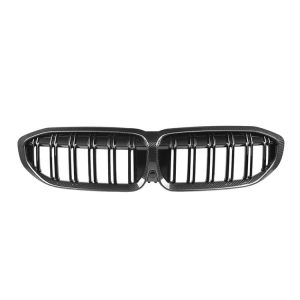
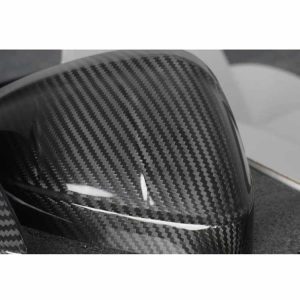
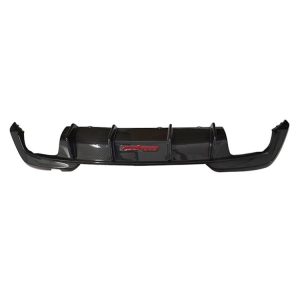
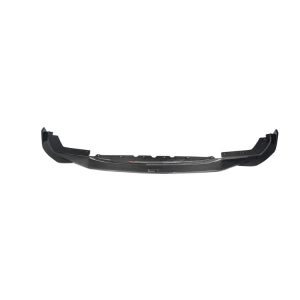
Autoclave vs. Compression Molding is what we talk about today. In the world of composite materials manufacturing, selecting the right processing technique can significantly impact the quality, performance, and cost of the final product. Two prominent methods—autoclave molding and compression molding—stand out for their ability to produce high-strength components, particularly in industries like aerospace, automotive, and marine. This article delves into the differences between autoclave and compression molding, exploring their definitions, processes, advantages, disadvantages, applications, and more. By understanding these techniques from multiple dimensions, manufacturers can make informed decisions to optimize production.

Whether you’re dealing with polymer composites reinforced with fibers like carbon or glass, or seeking ways to achieve superior mechanical properties, this comparison highlights key factors. We’ll examine how each method handles heat, pressure, materials, and potential challenges, drawing on industry data to provide a comprehensive view.
What is Autoclave Molding?
Autoclave molding is a sophisticated manufacturing process used primarily for curing composite materials under controlled heat and pressure. It involves placing pre-impregnated materials (prepregs) into a mold, sealing them, and subjecting the assembly to elevated temperatures and pressures inside a specialized vessel known as an autoclave. This method is akin to a high-tech oven that ensures uniform curing, resulting in parts with exceptional strength and minimal defects.
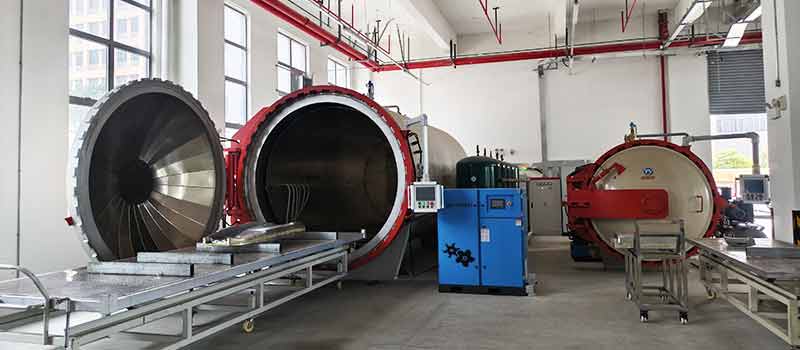
Key Components and Materials in Autoclave Molding
The process begins with prepregs, which are sheets of reinforcement fibers (such as carbon, glass, or aramid) pre-impregnated with a partially cured resin matrix, typically thermoset polymers like epoxy or polyester. These prepregs are stacked in layers within an open mold, often following a specific sequence to achieve desired properties like directional strength.
Additional elements include:
- Release Agents: Applied to the mold surface to prevent sticking.
- Vacuum Bagging: A flexible bag sealed over the layup, connected to a vacuum pump to remove air entrapment and excess resin.
- Breather Fabrics and Peel Plies: Used to facilitate air evacuation and provide a clean surface finish.
- Autoclave Vessel: A pressurized chamber capable of temperatures up to 200°C (392°F) and pressures of 5-10 bar (72-145 psi), depending on the material.
According to data from the American Composites Manufacturers Association (ACMA), autoclave molding can achieve fiber volume fractions of up to 60-70%, contributing to parts that are 20-30% lighter than equivalent metal components while maintaining comparable stiffness.
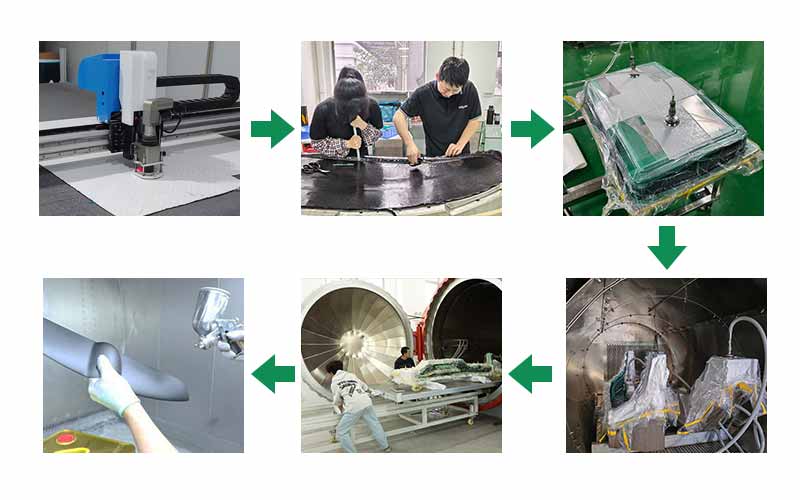
Step-by-Step Process of Autoclave Molding
- Preparation: Apply a release gel or film to the mold. Cut and stack prepregs layer by layer based on thickness requirements.
- Vacuum Bagging: Seal the assembly with a vacuum bag, apply vacuum to eliminate air bubbles, and use breather fabrics for even pressure distribution.
- Transfer to Autoclave: Place the bagged mold into the autoclave.
- Curing Cycle: Apply heat and pressure gradually. For epoxy-based composites, a typical cycle might involve heating to 120-180°C for 1-2 hours under 3-7 bar pressure.
- Cooling and Demolding: Cool the assembly at a controlled rate to avoid thermal stresses, then remove the vacuum bag and extract the part.
This process ensures excellent consolidation, reducing voids to less than 1%, as per standards outlined in ASTM D3171 for void content measurement in composites.
Advantages of Autoclave Molding
- High-Quality Output: Produces parts with superior uniformity, adhesion between layers, and control over resin flow.
- Versatility: Suitable for both thermoset and thermoplastic matrices, allowing for complex shapes with high reinforcement content.
- Strength-to-Weight Ratio: Ideal for applications needing resilience, with parts exhibiting tensile strengths up to 2,000 MPa in carbon fiber composites, based on reports from the Society of Automotive Engineers (SAE).
Disadvantages of Autoclave Molding
- Size Limitations: Part dimensions are restricted by autoclave capacity, typically up to 10-20 meters in length for industrial units.
- Cost and Time: High equipment costs (autoclaves can exceed $1 million) and longer cycle times (2-6 hours) make it less suitable for high-volume production.
- Labor Intensity: Requires skilled operators to manage variables like temperature ramps and pressure levels.
What is Compression Molding?
Compression molding is a closed-mold process where a charge of material—often a mixture of resin and chopped fibers—is placed into a heated mold cavity and compressed under high pressure to form the part. It’s particularly effective for creating dense, high-performance components with random fiber orientation, such as forged carbon fiber parts.
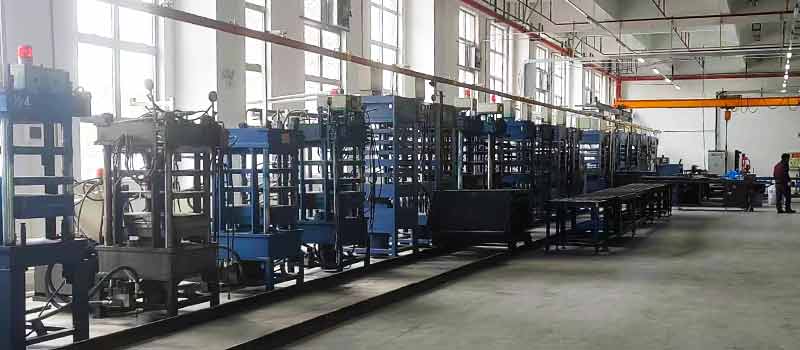
Key Components and Materials in Compression Molding
Materials typically include:
- Chopped Tow or Fibers: Short strands of carbon, glass, or other reinforcements, often 6-12 mm in length for random distribution.
- Resin Matrix: Low-viscosity epoxies or polyesters for easy flow, mixed at ratios like 40% resin to 60% fiber.
- Mold Tools: Multi-part molds made from resin casts, 3D-printed plastics (e.g., PET-G), or aluminum for durability.
- Release Agents: Waxes or sprays to facilitate demolding.
Industry data from the CompositesWorld magazine indicates that compression molding can achieve densities of 1.4-1.6 g/cm³, making it competitive with metals in structural applications.
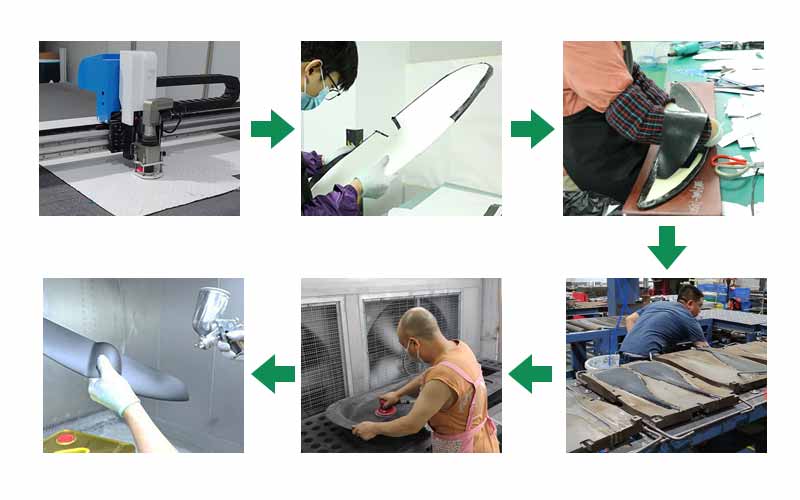
Step-by-Step Process of Compression Molding
- Mold Preparation: Design molds with features like draft angles (2-3°) for easy release and ejection points. Apply release wax in multiple layers.
- Material Loading: Weigh fiber (e.g., 60% of target part weight) and mix resin (25% excess for flow). Coat the mold with resin, then stipple in fibers layer by layer.
- Compression: Close mold halves gradually using clamps or presses, applying pressure over 5-10 minutes to allow resin escape without hydraulic lock.
- Curing: Cure at room temperature (24 hours) or elevated heat for faster cycles.
- Demolding and Finishing: Separate molds, remove flash, and perform post-machining like drilling.
This method is forgiving for geometries with undercuts or thick sections, as fibers flow during compression.
Advantages of Compression Molding
- Cost-Effectiveness: Lower equipment needs; basic clamps suffice for small runs, reducing capital costs by 50-70% compared to autoclaves, per ACMA estimates.
- Rapid Prototyping: Suitable for short runs or complex shapes, with cycle times as low as 10-30 minutes for heated molds.
- Material Efficiency: Achieves optimal 60/40 fiber-resin ratios, yielding parts with compressive strengths exceeding 1,000 MPa.
Disadvantages of Compression Molding
- Limited to Certain Geometries: Best for smaller parts; large panels require immense pressure (up to 100 tons), making it impractical beyond 0.25 m².
- Surface Finish: May require post-processing for aesthetics, as flash lines and wax residues can affect appearance.
- Fiber Orientation: Random distribution limits directional strength compared to aligned fibers in other methods.
Autoclave vs. Compression Molding: A Detailed Comparison
To highlight the differences, let’s compare the two methods across key dimensions using a table for clarity:
| Aspect | Autoclave Molding | Compression Molding |
|---|---|---|
| Process Type | Open mold with vacuum bagging | Closed mold with direct compression |
| Key Variables | Heat (up to 200°C), pressure (5-10 bar), vacuum | Pressure (via clamps/presses), optional heat |
| Materials | Prepregs (pre-impregnated fibers) | Dry chopped fibers + mixed resin |
| Fiber Orientation | Directional or random, high volume fraction (60-70%) | Primarily random, 50-60% fraction |
| Cycle Time | 2-6 hours | 10 minutes to 24 hours |
| Part Size | Limited by autoclave (large possible) | Smaller, geometry-dependent |
| Cost | High (equipment, energy) | Lower (basic tools) |
| Quality Metrics | Low voids (<1%), high uniformity | Good consolidation, potential flash |
| Energy Use | High (heating/pressurizing) | Moderate (ambient cure possible) |
Dimensional Analysis: Performance and Mechanical Properties
From a mechanical standpoint, autoclave molding excels in producing parts with superior interlaminar shear strength (up to 100 MPa), ideal for load-bearing applications, as per FAA guidelines for aerospace composites. Compression molding, however, offers better impact resistance due to random fibers, with studies from the National Institute for Aviation Research showing 20-30% higher toughness in forged carbon parts versus laminated ones.
Cost-wise, autoclave processes can be 2-3 times more expensive per part for low volumes, but scale better for precision needs. Compression molding shines in prototyping, with setup costs under $1,000 for 3D-printed molds.
Environmental and Sustainability Considerations
Both methods generate waste like excess resin, but autoclave molding’s vacuum bagging reduces emissions by capturing volatiles. Compression molding minimizes material waste through precise loading, aligning with EU REACH regulations for sustainable manufacturing. Data from the EPA indicates that optimized compression processes can reduce energy consumption by 40% compared to heated autoclaves.
Common Problems and Solutions in Autoclave and Compression Molding
Issues in Autoclave Molding
- Air Entrapment: Leads to voids; solution: Enhance vacuum bagging with breather fabrics.
- Thermal Gradients: Uneven curing; solution: Use controlled ramps, as recommended in ISO 14125 standards.
- Resin Bleed: Excess flow; solution: Optimize prepreg stacking and pressure cycles.
Issues in Compression Molding
- Hydraulic Lock: Mold won’t close; solution: Apply pressure gradually over 10 minutes.
- Dry Spots: Incomplete wetting; solution: Use low-viscosity resins and stipple fibers evenly.
- Flash and Burrs: Excess material; solution: Design molds with tight tolerances and clean post-mold.
Addressing these ensures defect rates below 5%, per industry benchmarks from the Composites Market Report.
Applications of Autoclave and Compression Molding
Autoclave molding dominates in aerospace (e.g., aircraft wings) and military (missiles), where high strength-to-weight ratios are critical—NASA reports using it for 70% of composite structures in spacecraft. Compression molding is prevalent in automotive (gear levers, flywheel covers) and consumer goods, producing over 50 million parts annually worldwide, according to the International Automotive Composites Council.
Future Trends and Innovations
Advancements include hybrid processes combining elements of both, like out-of-autoclave compression for cost savings. With the global composites market projected to reach $160 billion by 2030 (per Grand View Research), energy-efficient variants are emerging, reducing carbon footprints by 25%.
Carbon Fiber Solutions for Performance & Innovation is one of the advantages of Noah Composites. If you want to customize any carbon composite product, please contact us.
Conclusion: Choosing Between Autoclave and Compression Molding
Autoclave molding offers unparalleled quality for high-stakes applications, while compression molding provides accessibility and speed for prototyping and mid-volume production. The choice depends on factors like part complexity, budget, and performance needs. By weighing these differences, manufacturers can leverage the strengths of each to innovate in composite technologies. For optimal results, always adhere to standards like ASTM and consult industry reports for data-driven decisions.