When people talk about high-performance composite materials, T700 carbon fiber is one of the most recognized names in the industry. Known for its excellent balance of strength, stiffness, weight reduction, and production efficiency, T700 has become a preferred carbon fiber grade for manufacturers producing lightweight composite components across automotive, marine, aerospace, sports, and industrial applications.
But what exactly is T700 carbon fiber? How does it compare with other grades such as T800 and T300? Is T700 carbon good enough for demanding engineering applications?
The answer depends on the specific design requirements, manufacturing process, and performance expectations of each project.
As a standard-modulus, high-strength PAN-based carbon fiber, T700 provides an ideal combination of mechanical performance and manufacturability. This makes it especially suitable for OEM and ODM production where consistent quality, scalable manufacturing, and cost efficiency are critical.
At Noah Composites, we work with advanced composite manufacturing technologies including carbon fiber prepreg processing, compression molding, autoclave curing, CNC machining, and surface finishing to develop carbon fiber components for different industries worldwide.
What Is T700 Carbon Fiber?
T700 carbon fiber is a high-strength, standard-modulus carbon fiber developed by Toray Industries, one of the world’s leading carbon fiber manufacturers.

The «T» designation refers to Toray’s carbon fiber product series, while the «700» represents its specific performance category. T700 is produced from PAN (polyacrylonitrile)-based precursor fibers and is widely recognized for its combination of:
- High tensile strength
- Good stiffness
- Excellent fatigue resistance
- Stable processing performance
- Competitive production cost
Among different carbon fiber grades, T700 is considered one of the most commercially successful materials because it provides a practical balance between performance and manufacturing efficiency.
Unlike ultra-high-performance carbon fibers that are mainly used in aerospace or specialized racing applications, T700 carbon fiber is suitable for large-scale composite manufacturing where reliability and cost control are equally important.
T700 Carbon Fiber Properties and Mechanical Performance
The mechanical properties of T700 carbon fiber make it a popular choice for structural and semi-structural composite applications.
Typical properties include:
| Property | Typical Value |
|---|---|
| Fiber Type | PAN-based carbon fiber |
| Modulus Classification | Standard modulus |
| Tensile Strength | Approximately 4,900 MPa |
| Tensile Modulus | Approximately 230–245 GPa |
| Density | Around 1.80 g/cm³ |
| Fiber Diameter | Approximately 7 μm |
| Strain to Failure | Around 2.1% |
These characteristics allow T700 carbon fiber composites to achieve significant weight savings compared with traditional materials such as steel and aluminum while maintaining excellent mechanical performance.
For manufacturers, another important advantage of T700 is its processing consistency. The material performs well in various composite manufacturing methods, including:
- Prepreg carbon fiber layup
- Compression molding
- Autoclave curing
- Resin transfer molding (RTM)
- Other advanced composite manufacturing processes
This versatility allows engineers to select suitable production methods based on part size, performance requirements, and production volume.
Carbon Fiber T700 vs T800 vs T300: Which Carbon Fiber Grade Is Better?
When selecting carbon fiber materials, one of the most common questions engineers and buyers ask is:
“What is the difference between carbon fiber T700 vs T800?”

Although higher-grade carbon fibers often provide improved mechanical performance, the best material choice depends on the application requirements, production process, and cost considerations.
T700, T800, and T300 are all PAN-based carbon fibers, but they belong to different performance categories.
T700 Carbon Fiber vs T300 Carbon Fiber
T300 is one of the earliest commercial carbon fiber grades and has been widely used in general composite applications. Compared with T300, T700 offers higher tensile strength while maintaining similar manufacturing advantages.
| Property | T300 | T700 |
|---|---|---|
| Fiber Type | Standard modulus | Standard modulus |
| Tensile Strength | Approx. 3.5 GPa | Approx. 4.9GPa |
| Tensile Modulus | Approx. 230 GPa | Approx. 230–245 GPa |
| Strength Level | General purpose | High strength |
| Typical Applications | Basic composites, industrial parts | Automotive, marine, sports, structural composites |
For applications requiring higher mechanical performance, better fatigue resistance, and improved reliability, T700 carbon fiber is generally preferred over T300.
This is why many manufacturers have moved from traditional T300 materials toward T700 carbon fiber for higher-performance composite components.
Carbon Fiber T700 vs T800: Key Differences
The comparison between carbon fiber T700 vs T800 is one of the most searched topics among composite engineers and purchasing teams.
The main difference is that T800 provides higher strength and stiffness, while T700 offers better cost efficiency and easier manufacturing.
| Property | T700 Carbon Fiber | T800 Carbon Fiber |
|---|---|---|
| Fiber Classification | Standard modulus, high strength | Intermediate modulus, higher performance |
| Tensile Strength | Approx. 4. 9 GPa | Approx. 5.5GPa |
| Tensile Modulus | 230–245 GPa | Approx. 294 GPa |
| Weight Reduction Capability | Excellent | Excellent |
| Production Difficulty | Easier processing | More demanding processing |
| Cost | More economical | Higher material cost |
| Common Applications | Automotive, marine, sports, industrial composites | Aerospace, racing, advanced structures |
T800 carbon fiber provides higher stiffness, which can be beneficial for applications where minimum deformation is critical.
However, for many commercial composite components, the additional performance of T800 does not always justify the higher material cost.
For example:
- Automotive body panels
- Carbon fiber spoilers
- Intake systems
- Hydrofoil components
- Marine structures
- Sports equipment
often achieve excellent performance using T700 carbon fiber composites.
The correct material selection should be based on engineering requirements rather than simply choosing the highest grade available.
T700 vs T1000 Carbon Fiber: Is Higher Always Better?
T1000 carbon fiber belongs to the ultra-high-strength category and delivers even greater tensile performance than T700.
However, higher performance also means:
- Higher material cost
- More demanding processing requirements
- Lower economic efficiency for mass production
For specialized applications such as aerospace structures, advanced racing components, and military equipment, higher-grade carbon fibers may provide advantages.
But for most commercial composite manufacturing projects, T700 offers an excellent balance of:
- Mechanical performance
- Production reliability
- Manufacturing efficiency
- Cost control
This balance is one of the main reasons why T700 remains one of the most widely used carbon fiber grades worldwide.
Is T700 Carbon Good?
A common search question is:
“Is T700 carbon good?”
The answer is yes. T700 carbon fiber is considered one of the most practical and reliable carbon fiber materials for performance composite manufacturing.
Its popularity comes from several key advantages.
1. Excellent Strength-to-Weight Ratio
One of the biggest advantages of T700 carbon fiber is its ability to provide high mechanical strength while maintaining extremely low weight.
Compared with traditional metals such as steel, T700 carbon fiber composites can significantly reduce component weight while maintaining structural performance.
This makes it valuable for industries focused on:
- Vehicle lightweighting
- Energy efficiency
- Performance improvement
- Transportation innovation
2. Reliable Manufacturing Performance
For manufacturers, material consistency is just as important as mechanical properties.
T700 carbon fiber provides stable processing characteristics, making it suitable for:
- High-volume production
- OEM manufacturing
- Repeatable quality control
- Complex composite structures
3. Excellent Surface Appearance
Besides structural performance, carbon fiber is also valued for its premium visual appearance.
T700 carbon fiber fabrics can achieve:
- 3K twill weave finishes
- Plain weave patterns
- Matte surfaces
- Gloss finishes
- Custom appearance requirements
This makes T700 popular in industries where both engineering performance and aesthetics matter.
Examples include:
- Automotive exterior parts
- Luxury consumer products
- Sports equipment
- Marine components
4. Compatible With Multiple Composite Manufacturing Processes
T700 carbon fiber can be processed using various manufacturing technologies, including:
Carbon Fiber Prepreg
Prepreg systems provide:
- Controlled resin content
- High fiber volume
- Excellent mechanical performance
- Consistent quality
Commonly used for:
- Automotive performance parts
- Aerospace components
- High-end sporting equipment
Compression Molding
Compression molding enables:
- Faster production cycles
- Lower labor requirements
- Consistent part quality
Suitable for:
- Automotive components
- Industrial composite parts
- Mass production applications
Autoclave Curing
Autoclave carbon fiber manufacturing provides:
- High-pressure curing
- Improved laminate quality
- Excellent surface finish
Often used for:
- Premium automotive parts
- Aerospace components
- High-performance applications
T700 Carbon Fiber Applications Across Industries
Although T700 carbon fiber is widely known in automotive applications, its use extends far beyond vehicle components.
Its combination of strength, lightweight properties, fatigue resistance, and manufacturing flexibility makes it suitable for multiple industries.

Automotive Applications
The automotive industry remains one of the largest markets for T700 carbon fiber components.
Common applications include:
Exterior Components
- Carbon fiber hoods
- Roof panels
- Trunk lids
- Fenders
- Body panels
Aerodynamic Components
- Front splitters
- Rear diffusers
- Spoilers
- Side skirts
- Canards
Performance Components
- Cold air intake systems
- Engine covers
- Structural reinforcement parts
- Interior trim components
T700 carbon fiber helps automotive manufacturers achieve:
- Reduced vehicle weight
- Improved performance
- Better fuel efficiency
- Premium appearance
For aftermarket brands and OEM suppliers, T700 provides an effective balance between performance and production cost.
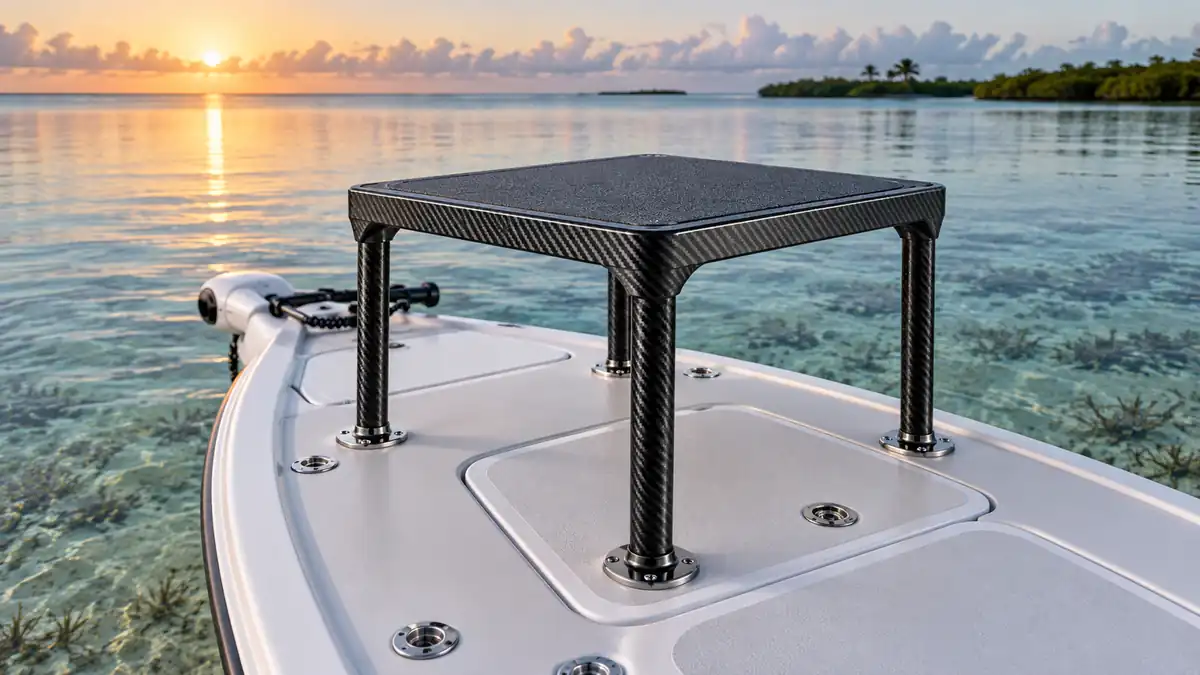
Marine Applications
Carbon fiber has become increasingly important in marine industries because lightweight structures can improve speed, efficiency, and handling.
T700 carbon fiber is commonly used for:
- Hydrofoil components
- Foil boards
- Racing boat structures
- Marine panels
- Lightweight reinforcement parts
In hydrofoil applications, carbon fiber composites help create components with:
- High stiffness
- Low weight
- Excellent fatigue resistance
- Corrosion resistance
For marine manufacturers, T700 carbon fiber provides a strong alternative to traditional materials such as aluminum and fiberglass.
Aerospace & UAV Applications of T700 Carbon Fiber
Although T700 carbon fiber is widely recognized in automotive applications, its excellent strength-to-weight ratio and fatigue resistance also make it valuable for aerospace and unmanned aerial vehicle (UAV) applications.
In industries where reducing weight directly improves efficiency and performance, carbon fiber composite materials have become an essential engineering solution.
UAV and Drone Components
The UAV industry increasingly relies on carbon fiber because lightweight structures allow drones to achieve:
- Longer flight time
- Higher payload capacity
- Improved structural stability
- Better vibration resistance
T700 carbon fiber is commonly used for:
- Drone frames
- UAV arms
- Propeller structures
- Lightweight brackets
- Equipment mounting structures
Compared with traditional aluminum structures, T700 carbon fiber composites provide:
- Lower weight
- Higher specific strength
- Better fatigue performance
- Excellent dimensional stability
For commercial UAV manufacturers, T700 offers a practical balance between performance and manufacturing cost, especially for medium and large production volumes.
Aerospace Composite Structures
In aerospace applications, material selection is extremely demanding because components must withstand:
- Repeated loading cycles
- Temperature changes
- Mechanical stress
- Strict weight requirements
While higher-performance carbon fiber grades are often selected for critical aerospace structures, T700 carbon fiber is still widely considered a reliable option for many composite applications, including:
- Interior aerospace components
- Secondary structures
- Lightweight brackets
- Support components
Its combination of mechanical properties and manufacturing reliability makes it suitable for projects where production efficiency and cost control are important.
Sports Equipment Applications
The sports industry was one of the earliest adopters of carbon fiber technology.
Today, T700 carbon fiber is widely used in performance sports equipment because athletes and manufacturers demand materials that are:
- Lightweight
- Strong
- Stiff
- Durable
Common applications include:
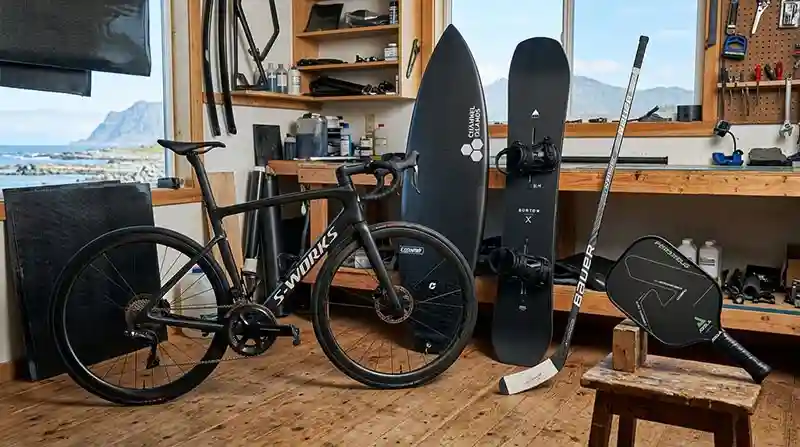
Cycling Components
T700 carbon fiber is frequently used for:
- Bicycle frames
- Forks
- Handlebars
- Seat posts
The material helps reduce overall weight while maintaining excellent stiffness and riding performance.
Surfing and Water Sports Equipment
In water sports, carbon fiber composites provide significant advantages.
Applications include:
- Surfboards
- Paddle boards
- Hydrofoil boards
- Foil components
- High-performance paddles
For hydrofoil products, T700 carbon fiber is particularly valuable because foil structures require:
- High stiffness to reduce deformation
- Lightweight construction for easier handling
- Fatigue resistance during repeated loading
Carbon fiber composite manufacturing allows designers to optimize fiber orientation according to different load directions, improving overall performance.
Other Sports Equipment
T700 carbon fiber is also used in:
- Golf shafts
- Tennis rackets
- Ski equipment
- Archery components
- Protective sports equipment
The material enables manufacturers to create lighter and stronger products while maintaining a premium appearance.
Industrial Applications of T700 Carbon Fiber
Beyond consumer products, T700 carbon fiber plays an important role in industrial composite applications.
Many industries use carbon fiber when traditional materials cannot meet requirements for:
- Weight reduction
- Structural stiffness
- Corrosion resistance
- Precision performance
Common industrial applications include:
Robotics and Automation Equipment
Carbon fiber components are used in:
- Robotic arms
- Precision moving structures
- Lightweight mechanical parts
The low weight of carbon fiber allows faster movement and improved energy efficiency.
Precision Equipment
T700 carbon fiber composites are suitable for:
- Measurement equipment
- Industrial fixtures
- Machine components
- Lightweight structural supports
Because carbon fiber has excellent dimensional stability and low thermal expansion, it helps maintain precision in demanding environments.
Renewable Energy Applications
Carbon fiber composites are increasingly used in renewable energy industries.
Potential applications include:
- Wind turbine components
- Lightweight structural parts
- Reinforcement systems
The ability to create large, strong, and lightweight structures makes carbon fiber attractive for future energy technologies.
How T700 Carbon Fiber Components Are Manufactured
The performance of a carbon fiber component depends not only on the fiber grade but also on:
- Fiber orientation
- Resin system
- Laminate design
- Manufacturing process
- Quality control
Even the best carbon fiber material cannot achieve optimal performance without proper composite manufacturing technology.
At Noah Composites, T700 carbon fiber components are produced through advanced manufacturing processes designed for OEM, ODM, and custom composite projects.
Carbon Fiber Prepreg Preparation
Prepreg carbon fiber is one of the most widely used methods for producing high-performance composite parts.
During prepreg processing:
- Carbon fiber fabric is impregnated with controlled resin content.
- Material is stored under controlled temperature conditions.
- Engineers design fiber orientations according to load requirements.
- Layers are precisely cut and arranged before molding.
Advantages of carbon fiber prepreg include:
- Consistent resin distribution
- High fiber volume fraction
- Excellent mechanical properties
- Stable production quality
This process is commonly used for:
- Automotive performance parts
- Marine components
- Aerospace composite structures
- Premium sports equipment
Compression Molding for T700 Carbon Fiber Components
Compression molding is an efficient manufacturing process for producing composite components at scale.
The process involves:
- Preparing carbon fiber material layers
- Placing material into precision molds
- Applying controlled heat and pressure
- Curing the composite part
- CNC trimming and finishing
Advantages include:
- High production efficiency
- Repeatable quality
- Reduced manufacturing time
- Suitable for medium and large volume production
Compression molding is commonly used for:
- Automotive body components
- Structural composite parts
- Sports equipment
- Industrial applications
Autoclave Carbon Fiber Manufacturing
For applications requiring premium quality and excellent surface finish, autoclave curing remains one of the most advanced composite manufacturing methods.
During autoclave processing:
- Vacuum removes trapped air
- Controlled temperature cures the resin
- High pressure improves laminate quality
Benefits include:
- High strength-to-weight ratio
- Excellent surface appearance
- Reduced void content
- Superior structural performance
Autoclave carbon fiber manufacturing is often selected for:
- High-end automotive components
- Aerospace parts
- Marine performance products
- Advanced composite applications
Why Manufacturing Capability Matters When Choosing T700 Carbon Fiber
Many companies focus only on the carbon fiber grade, but the final component performance depends heavily on manufacturing expertise.
Important factors include:
Material Selection
A professional manufacturer should understand:
- Fiber grade selection
- Fabric style
- Resin system
- Application requirements
Laminate Design
Proper fiber orientation determines:
- Strength direction
- Stiffness performance
- Impact resistance
Precision Manufacturing
Advanced equipment helps achieve:
- Accurate dimensions
- Consistent quality
- Reliable production
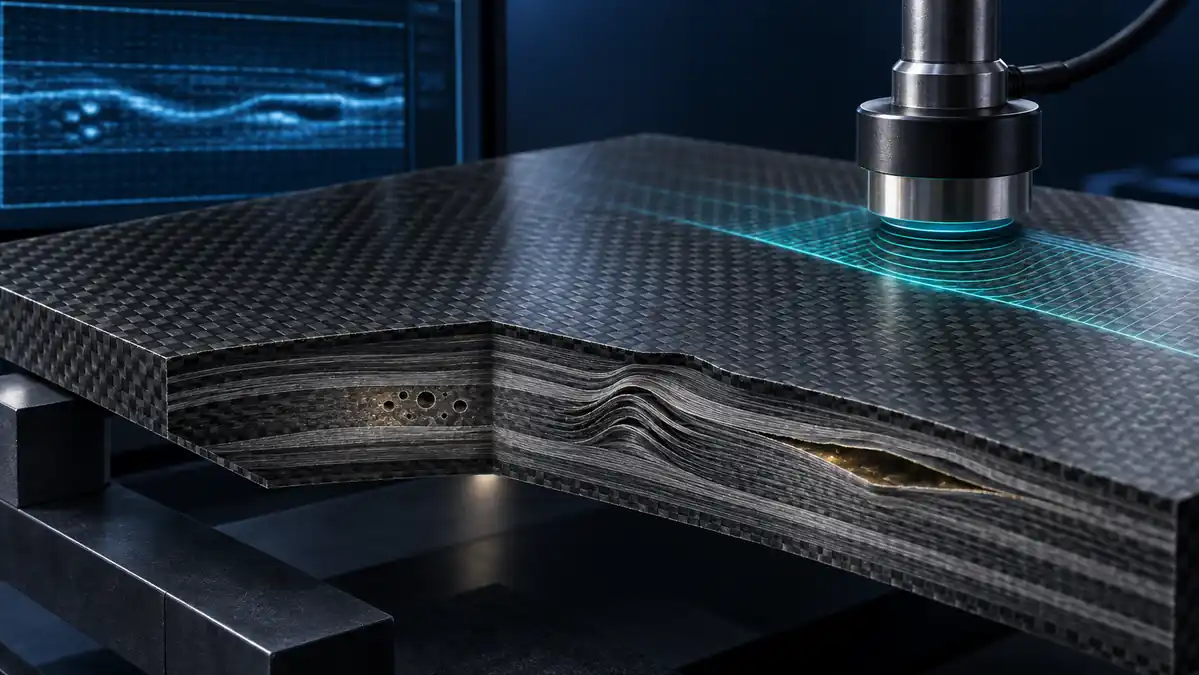
Quality Control
A complete composite manufacturing process should include inspection of:
- Raw materials
- Mold quality
- Curing process
- Finished components
How to Choose a Reliable T700 Carbon Fiber Manufacturer
Selecting the right T700 carbon fiber manufacturer is not only about finding a supplier that can provide carbon fiber materials. For OEM and ODM projects, the manufacturer’s engineering capability, production experience, quality control system, and composite manufacturing expertise directly affect the final product performance.
A reliable carbon fiber supplier should provide more than raw materials. They should have the ability to transform carbon fiber fabrics or prepreg materials into finished composite components that meet specific application requirements.
When evaluating a T700 carbon fiber manufacturer, consider the following factors.
1. Verify Carbon Fiber Material Quality and Traceability
The first step is confirming that the manufacturer understands carbon fiber material specifications.
A professional supplier should be able to provide information about:
- Carbon fiber grade
- Fiber manufacturer
- Material specifications
- Resin system
- Batch consistency
- Technical documentation
For projects requiring T700 carbon fiber composites, material traceability is important because different carbon fiber grades can have significant differences in:
- Mechanical properties
- Processing behavior
- Final part performance
Reliable manufacturers should have strict incoming material inspection procedures to ensure consistent quality.
2. Evaluate Composite Manufacturing Capability
Carbon fiber performance depends heavily on manufacturing technology.
A capable manufacturer should have experience with multiple composite manufacturing processes, including:
Prepreg Carbon Fiber Processing
Suitable for:
- High-performance components
- Complex structures
- Premium applications
Compression Molding
Suitable for:
- Medium and high-volume production
- Automotive components
- Industrial composite parts
Autoclave Curing
Suitable for:
- High-strength components
- Premium surface finishes
- Advanced composite applications
Manufacturers with multiple production technologies can recommend the most suitable process based on:
- Part design
- Performance requirements
- Production quantity
- Cost targets
3. Check Engineering and Customization Ability
For OEM and ODM customers, manufacturing capability is often more important than simply supplying standard products.
A professional T700 carbon fiber manufacturer should support:
- Custom part design
- Carbon fiber layup optimization
- Mold development
- Prototype production
- Surface finish customization
- Packaging solutions
- Private label services
This allows brands to develop unique products instead of competing only on existing designs.
4. Review Quality Control Systems
Quality control is essential for carbon fiber composite manufacturing.
A complete quality system should include:
Raw Material Inspection
Checking:
- Carbon fiber materials
- Resin systems
- Prepreg conditions
Production Process Control
Monitoring:
- Layup accuracy
- Molding temperature
- Pressure parameters
- Curing conditions
Final Inspection
Including:
- Dimensional inspection
- Surface quality inspection
- Mechanical testing when required
For industries such as automotive, marine, and aerospace, consistent quality is critical for long-term reliability.
Why Choose Noah Composites for T700 Carbon Fiber Solutions?
As a professional carbon fiber composite manufacturer, Noah Composites provides integrated composite manufacturing solutions for customers across automotive, marine, sports, UAV, and emerging industries.
With more than 14 years of carbon fiber manufacturing experience and a 32,000 m² integrated production facility, Noah supports customers from material selection and prototype development to mass production and global delivery.
Integrated Carbon Fiber Manufacturing Capability
Unlike companies that only assemble or outsource production, Noah Composites manages multiple stages of the composite manufacturing process in-house.
Our capabilities include:
- Carbon fiber material preparation
- Prepreg carbon fiber processing
- Automated carbon fiber cutting
- Precision CNC machining
- Compression molding
- Autoclave curing
- Surface finishing
- Quality inspection
- Global packaging and logistics
This integrated approach helps ensure:
- Stable product quality
- Faster communication
- Better production control
- Flexible OEM/ODM support
Advanced Composite Manufacturing Processes
Different applications require different manufacturing solutions.

Noah Composites provides:
Compression Molding Carbon Fiber
For efficient production of:
- Automotive components
- Sports equipment
- Industrial composite parts
Autoclave Carbon Fiber Manufacturing
For premium applications requiring:
- Excellent surface finish
- High laminate quality
- Superior mechanical performance
Custom Composite Solutions
Including:
- Carbon fiber weave selection
- Surface finish customization
- Structural optimization
- Private label manufacturing
Serving Multiple Industries Worldwide
Noah Composites provides carbon fiber solutions for:
Automotive
Including:
- Carbon fiber body parts
- Performance components
- Intake systems
- Interior trim
Marine
Including:
- Hydrofoil components
- Surf products
- Lightweight marine structures
Sports
Including:
- Carbon fiber sporting equipment
- Performance composite products
UAV and Emerging Applications
Including:
- Lightweight composite structures
- Custom carbon fiber components
By combining material expertise with advanced manufacturing capability, Noah helps global brands develop lightweight and high-performance products.
Frequently Asked Questions About T700 Carbon Fiber
What is T700 carbon fiber?
T700 carbon fiber is a high-strength, standard-modulus PAN-based carbon fiber developed by Toray Industries. It provides an excellent balance of tensile strength, stiffness, lightweight performance, and manufacturing efficiency, making it widely used in automotive, marine, sports, UAV, and industrial composite applications.
Is T700 carbon good?
Yes. T700 carbon fiber is considered one of the most practical carbon fiber grades for commercial composite manufacturing. It offers a strong balance between mechanical performance, production reliability, and cost efficiency.
For most applications, choosing the correct laminate design and manufacturing process is more important than simply selecting the highest carbon fiber grade.
What is the difference between carbon fiber T700 vs T800?
The main difference between T700 and T800 carbon fiber is performance level.
T800 provides higher tensile strength and stiffness, while T700 offers easier processing, lower cost, and excellent performance for large-scale production.
T700 is commonly used for:
- Automotive components
- Marine products
- Sports equipment
- Industrial composites
T800 is more common in:
- Aerospace applications
- Advanced racing structures
- High-performance projects
Is T700 carbon fiber better than T300?
For many performance applications, yes.
T700 provides significantly higher tensile strength than T300 while maintaining excellent processing characteristics.
This makes T700 more suitable for demanding applications where strength, reliability, and durability are important.
What industries use T700 carbon fiber?
T700 carbon fiber is used across many industries, including:
- Automotive manufacturing
- Marine composites
- UAV and drone structures
- Aerospace components
- Sports equipment
- Industrial composite applications
Its popularity comes from its ability to provide lightweight performance without excessive material cost.
Can T700 carbon fiber be used for OEM and ODM production?
Yes.
T700 carbon fiber is widely used for OEM and ODM projects because it provides consistent material performance and works well with advanced manufacturing processes such as:
- Prepreg molding
- Compression molding
- Autoclave curing
A capable manufacturer can customize fiber orientation, surface finish, part structure, and production methods according to project requirements.
How do I choose a T700 carbon fiber manufacturer?
A reliable T700 carbon fiber manufacturer should have:
- Proven composite manufacturing experience
- Material traceability
- Advanced production equipment
- Quality control procedures
- OEM/ODM customization capability
- Engineering support
Choosing a manufacturer with complete composite capabilities helps ensure consistent quality and long-term cooperation.
Conclusion: Why T700 Carbon Fiber Remains a Preferred Composite Material
T700 carbon fiber has become one of the most widely used carbon fiber grades because it provides the ideal combination of:
- High strength
- Lightweight performance
- Manufacturing reliability
- Cost efficiency
- Application flexibility
From automotive lightweight components to marine products, UAV structures, sports equipment, and industrial composites, T700 continues to support innovation across multiple industries.
While higher-grade fibers such as T800 and T1000 offer additional performance advantages, T700 remains the preferred choice for many commercial applications where performance and production efficiency must be balanced.
For companies looking for a reliable T700 carbon fiber manufacturer, Noah Composites provides OEM and ODM carbon fiber solutions with integrated composite manufacturing capabilities.
Contact Noah Composites to discuss your next carbon fiber project and develop high-performance composite components for your industry.