Carbon fiber application is wide and has great marketing potential in electric vehicles. In the rapidly evolving world of electric vehicles (EVs), where efficiency and sustainability drive innovation, carbon fiber emerges as a game-changing material. Often dubbed the «black gold» of modern engineering, carbon fiber composites are transforming how vehicles are built, offering unparalleled strength without the burden of excess weight. As the global push for greener transportation intensifies, with EV sales projected to surpass traditional combustion engines by the mid-2030s, understanding carbon fiber’s role becomes essential. This article delves into its applications, benefits, manufacturing processes, real-world examples, challenges, and future trends, highlighting why it’s pivotal for the new energy vehicle sector.
As an automotive carbon fiber parts manufacturer, we will show you more details, and we hope it will be useful to you.
What is Carbon Fiber?
Carbon fiber is a high-performance material composed primarily of carbon atoms arranged in a crystalline structure, forming thin strands finer than human hair. These strands, typically 5 to 10 micrometers in diameter, are woven into fabrics and combined with resins, metals, or ceramics to create carbon fiber reinforced polymers (CFRP). This composite material boasts a strength-to-weight ratio far superior to traditional metals like steel or aluminum. For instance, CFRP can be up to five times stronger than steel while weighing only a fraction as much, making it ideal for applications where lightness and durability are critical.
The «superpowers» of carbon fiber stem from its microscopic structure: carbon atoms form hexagonal graphite crystals, resembling a tightly woven spider web at the atomic level. This arrangement provides exceptional tensile strength, high modulus (stiffness), and resistance to heat, corrosion, and fatigue. According to research from institutions like the National Renewable Energy Laboratory (NREL), these properties enable CFRP to withstand extreme conditions, such as those in aerospace and automotive environments. In the context of EVs, this translates to lighter vehicles that consume less energy, extending battery life and reducing overall environmental impact.
Carbon Fiber Applications in Electric Vehicles
Carbon fiber’s versatility allows it to be integrated into various EV components, revolutionizing vehicle design and performance. One primary application is in body structures and chassis. For example, CFRP is used to construct monocoque frames, which provide a rigid, lightweight shell that enhances safety and handling. In models like the BMW i3, the Life-Drive module incorporates nearly 50% carbon fiber, resulting in a white body-in-white (BIW) weighing just 223 kg—a 50% reduction compared to steel equivalents. This not only improves aerodynamics but also protects the battery pack from impacts.

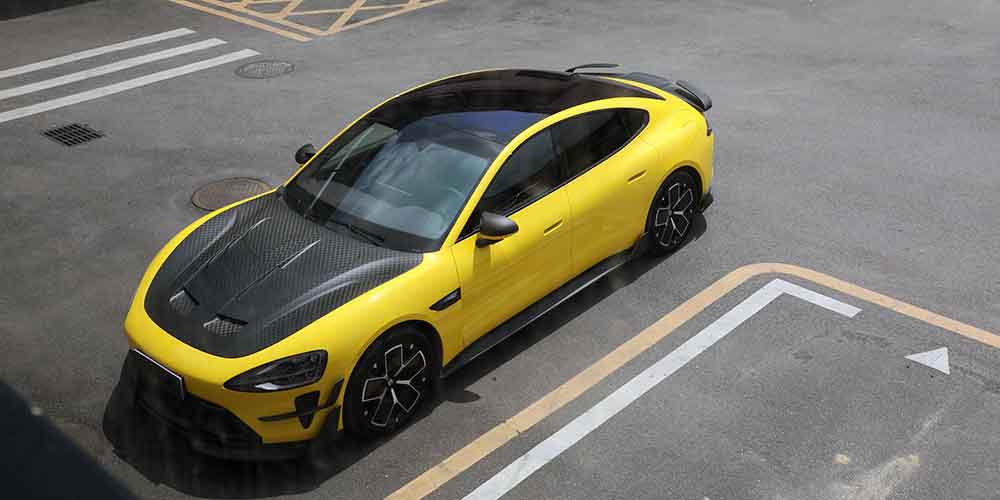
Beyond structural elements, carbon fiber appears in exterior panels such as hoods, roofs, and doors. These parts reduce overall vehicle mass, contributing to better acceleration and range. Hoods made from CFRP, for instance, improve airflow and heat dissipation, crucial for EV thermal management. Interior applications include seats, dashboards, and trim, where the material’s aesthetic appeal—often featuring a distinctive weave pattern—adds a premium feel while minimizing weight.
In powertrain components, carbon fiber is employed in battery enclosures and transmission shafts. Battery casings made from CFRP shield sensitive lithium-ion cells from damage, enhancing safety and allowing for more compact designs. Carbon fiber drive shafts, lighter than metal counterparts, reduce rotational inertia, improving efficiency in all-wheel-drive systems. Additionally, wheels and rims crafted from carbon fiber can cut unsprung weight by over 50%, leading to superior ride quality and energy savings.
Emerging uses extend to aerodynamic features like spoilers, diffusers, and air intakes. These elements optimize airflow, reducing drag and increasing downforce for better stability at high speeds. In electric buses and trucks, CFRP panels help achieve weight reductions that extend operational ranges, making them viable for commercial fleets. Overall, these applications underscore carbon fiber’s role in pushing EV performance boundaries.
Benefits of Carbon Fiber Composites in EVs
The adoption of carbon fiber in EVs yields multifaceted benefits, starting with weight reduction. A 10% decrease in vehicle mass can boost range by 6-8%, directly addressing «range anxiety» among consumers. Lighter vehicles require smaller batteries to achieve the same distance, lowering production costs and resource demands. For instance, CFRP’s density is about one-fifth that of steel, yet it offers five times the tensile strength, enabling manufacturers to downsize components without compromising integrity.
Energy efficiency is another key advantage. Reduced weight means less power is needed for acceleration and hill climbing, conserving battery life and extending intervals between charges. This efficiency translates to lower operating costs and reduced greenhouse gas emissions over the vehicle’s lifecycle. Moreover, carbon fiber’s superior vibration damping improves ride comfort, while its corrosion resistance ensures longevity in harsh environments, outperforming metals prone to rust.
Safety enhancements are significant. CFRP’s high impact absorption distributes crash forces more effectively, protecting occupants and critical systems like batteries. Studies from organizations such as the U.S. Department of Energy highlight how carbon fiber structures can lower injury risks in collisions. Environmentally, the material supports sustainability goals; its durability reduces the need for frequent replacements, and advancements in recycling—such as chemical depolymerization—allow for circular use, minimizing waste.
Performance-wise, carbon fiber enables quicker acceleration, better handling, and higher top speeds due to improved power-to-weight ratios. In competitive EVs, this edge is evident in models prioritizing agility. Finally, aesthetic and branding benefits arise from carbon fiber’s sleek, high-tech appearance, appealing to premium markets and justifying higher price points.
Manufacturing Processes for Carbon Fiber in Automotive Applications
Producing carbon fiber for automotive use involves sophisticated processes to ensure quality and scalability. The journey begins with precursor materials, typically polyacrylonitrile (PAN) fibers, which are stabilized through oxidation at 200-300°C, then carbonized at over 1,000°C in an inert atmosphere to remove non-carbon elements. Graphitization follows at temperatures up to 3,000°C, aligning the carbon crystals for optimal strength.
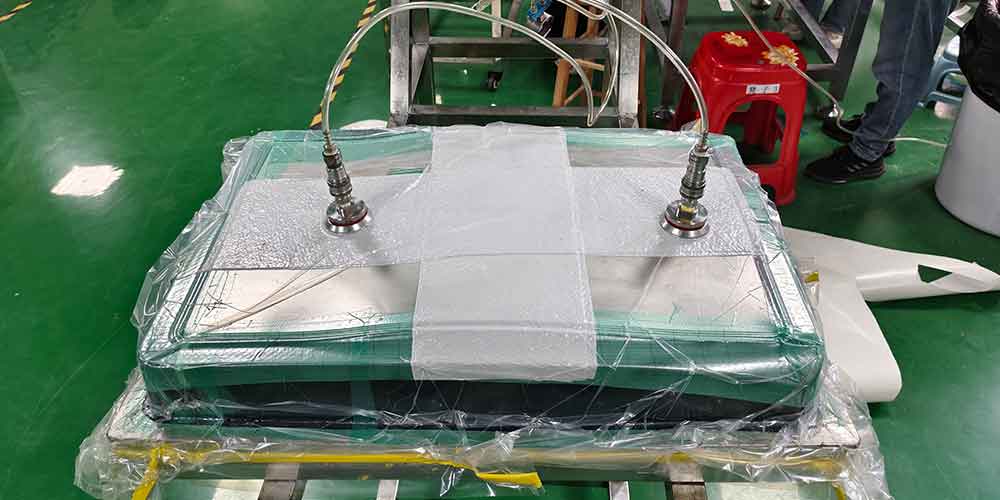
For composites, these fibers are woven into fabrics or prepregs (pre-impregnated with resin) and molded using techniques like autoclave curing, resin transfer molding (RTM), or automated fiber placement (AFP). RTM, favored in automotive production, injects resin into a fiber-filled mold under pressure, enabling high-volume output. Innovations like microwave-assisted curing and plasma stabilization reduce energy consumption and emissions, making processes more eco-friendly.
In EVs, hybrid approaches combine carbon fiber with other materials, such as glass fibers, to balance cost and performance. 3D printing with continuous carbon fiber filaments allows for complex geometries, speeding up prototyping and customization. Large-scale manufacturing breakthroughs, including cycle times as short as two minutes, support annual production of over 100,000 parts, transitioning CFRP from niche to mainstream use.
Quality control involves non-destructive testing, like ultrasoun,d to detect defects, ensuring components meet automotive standards. As per reports from the Society of Automotive Engineers (SAE), these processes are evolving to lower costs, with projections indicating wider adoption by 2030.
Case Studies: Real-World Implementations
Several automakers have pioneered carbon fiber integration in EVs. The BMW i3 exemplifies this with its carbon fiber passenger cell, which not only lightens the vehicle but also integrates seamlessly with aluminum subframes for optimal weight distribution. This design achieves a curb weight under 1,200 kg, enhancing range to over 150 miles on a single charge.
Tesla incorporates carbon fiber in models like the Model S Plaid for spoilers and interior accents, improving aerodynamics and luxury appeal. Polestar’s Precept concept showcases full-body CFRP construction, aiming for sustainability with recycled materials.
In commercial applications, Rivian’s R1T truck uses carbon fiber battery enclosures to protect against off-road impacts, extending durability. According to THE UNIVERSITY OF UTAH, these examples demonstrate how carbon fiber addresses specific EV challenges, from urban commuting to rugged terrain.
Challenges in Adopting Carbon Fiber for EVs
Despite its advantages, challenges persist. High production costs—stemming from energy-intensive manufacturing—limit accessibility to premium segments. Recycling remains complex, though advancements like NREL’s plant-based epoxies facilitate easier disassembly.
Repairability is another hurdle; damaged CFRP requires specialized techniques, increasing maintenance expenses. Supply chain vulnerabilities, including precursor shortages, could hinder scaling. However, ongoing research aims to mitigate these through cost-effective precursors and automated recycling.
Future Trends in Carbon Fiber for New Energy Vehicles
Looking ahead to 2030 and beyond, carbon fiber’s role in EVs will expand dramatically. Market forecasts predict the automotive carbon fiber sector reaching $79.54 billion by 2034, driven by EV proliferation. Trends include smarter composites embedded with sensors for real-time structural health monitoring, detecting stress or damage to prevent failures.
Integration with renewable energy tech, such as conductive CFRP for battery housings, will enhance thermal management and charging efficiency. Sustainable manufacturing, using bio-based precursors and low-emission processes, aligns with global decarbonization goals.

Hybrid materials blending carbon with graphene or recycled fibers will lower costs while maintaining performance. In flying EVs or air taxis, CFRP’s lightness will be crucial for vertical takeoff capabilities. As costs drop—potentially by 50% through automation—carbon fiber will permeate mass-market vehicles, democratizing its benefits
Conclusion
Carbon fiber stands at the forefront of the EV revolution, offering lightweight solutions that enhance range, safety, and efficiency. From structural innovations to future smart integrations, its potential is vast, promising a greener automotive landscape. As technologies mature, carbon fiber applications in electric car will not only redefine vehicle design but also contribute to broader sustainability efforts, making electric mobility accessible and effective for all.