Carbon Fiber Compression Molding for Prepreg Composite Parts

Carbon fiber compression molding is a controlled composite manufacturing process used to produce lightweight, high-strength carbon fiber parts with stable dimensions, consistent laminate quality, and efficient production cycles. At Noah Composites, this process mainly refers to prepreg compression molding, also known as PCM, where pre-impregnated carbon fiber materials are placed into precision molds and cured under heat and pressure using hot press molding equipment.

For manufacturers that serve automotive, marine, medical, industrial, sports, and high-performance consumer markets, carbon fiber compression molding offers a practical balance between structural performance, surface quality, repeatability, and scalable production efficiency. It is especially valuable when customers need more consistency than wet layup, better cycle efficiency than autoclave molding for suitable parts, and stronger production repeatability for OEM or ODM manufacturing programs.

Our carbon fiber compression molding is not treated as a single molding step. It is part of an integrated carbon fiber manufacturing system that combines prepreg material control, cold storage, automatic cutting, controlled layup, high-pressure compression molding, CNC trimming, surface finishing, painting, assembly, and final inspection. This end-to-end capability allows us to support both prototype development and mass production projects for global OEM and ODM customers.

We operate a 32,000-square-meter integrated manufacturing facility and has more than 14 years of carbon fiber manufacturing experience. Our production system includes prepreg storage and handling, automatic material cutting, compression molding equipment, autoclave molding, CNC machining, painting, assembly, and quality inspection. For compression molding production, we use different types of hydraulic press systems, including manual open-and-close mold presses, automatic mold opening and closing systems, multi-layer hot press machines, and high-tonnage hydraulic press equipment with maximum pressure capacity up to 500 tons.

What Is Carbon Fiber Compression Molding?

Carbon fiber compression molding is a composite forming process in which carbon fiber materials are placed into a heated mold and cured under controlled pressure. When the process uses pre-impregnated carbon fiber prepreg, it is commonly called prepreg compression molding or PCM. In this process, the carbon fiber reinforcement has already been combined with a controlled amount of resin by the material supplier. The prepreg is then cut, layered, placed into a heated mold, and cured under pressure.

Compared with wet layup, prepreg-based carbon fiber compression molding offers better resin control, more stable fiber volume fraction, improved dimensional repeatability, and higher production efficiency. Compared with autoclave molding, compression molding can often provide shorter cycle times and better suitability for medium- to high-volume production, especially for automotive and industrial components.

Compression molding itself is a broad process category. It may include SMC molding, BMC molding, wet compression molding, thermoplastic compression molding, and prepreg compression molding. However, for carbon fiber parts that require high performance and stable production quality, prepreg-based carbon fiber compression molding is a more precise and relevant process. That is why this page focuses on carbon fiber compression molding for prepreg composite parts rather than only general compression molding.

In simple terms, this process works by combining three key factors:

  1. A controlled carbon fiber prepreg material system
  2. A precision mold with stable heating capability
  3. A compression press that applies pressure during curing

Together, these factors help the carbon fiber laminate consolidate into a strong, lightweight, and dimensionally accurate component.

Carbon Fiber Compression Molding

Why Carbon Fiber Compression Molding Matters in Composite Manufacturing

Carbon fiber is valued because it can provide high strength and stiffness at a much lower weight than metal. However, carbon fiber performance depends heavily on manufacturing control. The same material can produce very different results depending on how it is cut, stored, laid up, heated, pressed, cured, trimmed, and inspected.

This is why carbon fiber compression molding is important for OEM and industrial composite production. It gives manufacturers a more controlled route for producing repeatable carbon fiber parts than traditional manual methods. For B2B customers, especially OEM buyers, consistency is often just as important as peak performance. A part that performs well once is not enough. It must perform reliably across batches, shipments, and production years.

Carbon Fiber Compression Molding in Composite Manufacturing

Carbon fiber compression molding is especially useful when customers need:

  • High production repeatability
  • Stable part thickness
  • Good surface quality
  • Accurate fiber orientation
  • Shorter production cycles than autoclave processing
  • Better resin control than wet layup
  • Suitable cost structure for medium- or high-volume programs
  • Stronger scalability for OEM and ODM production

For industries such as automotive carbon fiber parts, this process is often used because it supports lightweight design while still allowing practical mass production. Automotive components may include exterior panels, interior trims, structural reinforcements, aerodynamic parts, battery-related lightweight parts, seat structures, and other molded carbon fiber assemblies.

For marine, medical, UAV, robotics, sports equipment, and premium consumer applications, carbon fiber compression molding can also be used when the part geometry, production volume, surface requirement, and mechanical performance match the process.

Noah Composites Carbon Fiber Compression Molding Capability

Noah Composites has developed carbon fiber compression molding as part of a broader composite manufacturing platform. Instead of relying on one isolated production step, we combine material preparation, forming, machining, coating, assembly, and inspection within one factory system. This is important because compression molded carbon fiber part quality is influenced by everything before and after molding.

Our real factory data helps demonstrate this manufacturing foundation:

  • Noah Composites has more than 14 years of carbon fiber manufacturing experience.
  • The company operates a 32,000-square-meter integrated manufacturing facility.
  • Products have been exported to more than 50 countries and regions.
  • The factory supports OEM and ODM manufacturing for different industries.
  • The quality system includes ISO9001-based quality management.
  • Compression molding equipment includes different hydraulic press systems, including equipment with pressure capacity up to 500 tons.
  • The factory has supporting processes such as prepreg storage, automatic cutting, CNC machining, surface finishing, painting, assembly, and inspection.
Noah Composites Carbon Fiber Compression Molding Capability

Noah Composites is equipped with 27 hot press molding machines, including multi-layer hot presses, automatic hot press systems, and a 500-ton heated hydraulic press. The largest platen size can reach 2.2m × 1.65m, supporting larger molded carbon fiber parts and batch production. In addition, our CNC machining capability supports post-processing accuracy up to ±0.02mm, which is important for carbon fiber parts that require precise edges, holes, slots, and assembly interfaces.

These manufacturing details are important because carbon fiber compression molding is not only about having a press machine. A reliable supplier must also control material storage, cutting accuracy, layup quality, mold preparation, molding temperature, pressing force, trimming accuracy, surface finishing, and final inspection.

Carbon Fiber Compression Molding Process Flow at Noah Composites

A reliable carbon fiber compression molding process requires more than placing prepreg into a mold. The complete workflow includes material control, cutting, layup, molding, demolding, trimming, finishing, and inspection. Each step affects final part performance.

Prepreg Cold Storage

1. Prepreg Cold Storage and Material Control

Prepreg materials contain resin systems that must be stored properly before production. If prepreg is exposed to unsuitable temperatures or humidity for too long, resin behavior may change. This can affect tack, flow, curing quality, and final mechanical performance.

For prepreg-based compression molding production, prepreg cold storage is an important part of material control. Prepreg is typically kept in a low-temperature storage environment before use. Before cutting and layup, it must be thawed under controlled conditions to avoid moisture condensation and handling problems.

In addition to cold storage, prepreg out-time control and batch traceability are also important for maintaining stable resin behavior before molding.

This material control stage helps ensure:
1.Stable resin condition
2. Controlled shelf life
3. Reduced risk of premature curing
4. Better cutting and layup behavior
5. More consistent molding results

For customers, prepreg storage may not look as visible as a compression press, but it is one of the first signs of a professional carbon fiber manufacturer. A factory that handles prepreg correctly is more likely to produce stable carbon fiber compression molded parts.
Automatic Cutting and Nesting

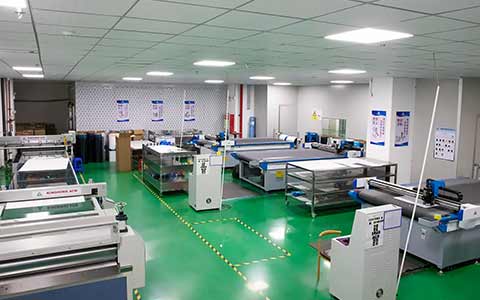
2. Automatic Cutting and Nesting

After material preparation, prepreg sheets are cut according to the engineering design. The cutting stage determines whether the correct ply shape, angle, and size are prepared for layup.

Noah Composites uses automatic cutting systems to improve precision and material efficiency. Automatic cutting is especially useful for prepreg compression molding because carbon fiber parts often require multiple layers with different fiber orientations. Each ply may need to be cut at specific angles such as 0 degrees, 45 degrees, -45 degrees, or 90 degrees, depending on the structural requirement.

Noah Composites uses digital cutting equipment and multi-angle carbon fabric cutting systems to support accurate ply preparation for different laminate designs. This helps improve cutting accuracy, reduce material waste, and support repeatable production for OEM and ODM projects.

Automatic cutting can support:
1.Accurate ply dimensions
2. Better repeatability between batches
3. Improved material utilization through nesting
4. Reduced manual cutting errors
5. Faster preparation for production runs

For OEM and ODM projects, automatic cutting also helps control production cost because carbon fiber prepreg is a high-value material. Better nesting and cutting accuracy can reduce waste while improving consistency.

Layup and Fiber Orientation Control

3. Layup and Fiber Orientation Control

Layup is the process of placing prepreg layers into the required sequence before molding. This step directly affects strength, stiffness, impact behavior, and dimensional stability.

For carbon fiber compression molding, layup may be manual, semi-automatic, or supported by fixtures depending on the part complexity and production volume. The most important point is that each layer must follow the correct orientation and position.

A typical carbon fiber part may use different ply orientations to balance strength in different directions. For example, 0-degree layers may support lengthwise stiffness, while 90-degree and 45-degree layers may improve transverse strength, torsional behavior, and overall laminate balance.

Noah Composites supports layup control for different carbon fiber structures, including flat panels, curved components, shell parts, reinforced parts, and molded assemblies. For sandwich structures(Internal link: /carbon-fiber-sandwich-panels/), foam cores or other core materials may also be included depending on design requirements.

However, it is important to distinguish compression molding from core manufacturing itself. Foam core machining, core shaping, or foam forming may be supporting processes, but carbon fiber compression molding remains the molding process used to consolidate the prepreg laminate and final part structure.

Mold Preparation and Tooling

4. Mold Preparation and Tooling

The mold is one of the most important elements in carbon fiber compression molding. A high-quality mold helps define the final part geometry, surface quality, thickness distribution, and dimensional accuracy.

Before compression molding, the mold must be cleaned, prepared, and checked. Mold release systems may be applied where needed. Inserts, reinforcements, or core materials may also be positioned according to the design.

Good mold design should consider:
1. Material flow behavior
2. Curing temperature
3. Pressure distribution
4. Demolding direction
5. Surface finish requirements
6. Dimensional tolerance
7. Production cycle efficiency

8.Part geometry
For carbon fiber parts that require visible surface quality, mold surface condition becomes even more important. Automotive exterior parts, consumer products, and premium carbon fiber accessories often need high-quality visual appearance. For hidden structural components, surface appearance may be less important than strength, tolerance, and stability.

Noah Composites can support mold development and manufacturing project evaluation for customers who need new compression molded carbon fiber parts from concept to production

Hot Press Molding Under Heat and Pressure

5. Hot Press Molding Under Heat and Pressure

Once the prepreg layup is ready and placed into the mold, the mold is closed and pressure is applied. Heat and pressure work together to cure the resin, consolidate the laminate, reduce voids, and form the final part shape.

Hot press molding parameters depend on the prepreg system, part thickness, mold design, and performance requirement. Typical process variables include:
1.Molding temperature
2. Pressing force
3. Curing time
4. Heating rate
5. Cooling control
6. Mold closing speed
7. Pressure holding time

For many carbon fiber prepreg systems, molding temperature may fall within a general range such as 120°C to 180°C, although the actual setting must follow the material specification and engineering validation. The actual molding temperature and pressure are determined by the prepreg resin system, part thickness, mold design, and customer performance requirements.

Noah Composites uses compression molding systems that can support different part sizes and production requirements, including high-tonnage hydraulic press equipment with pressure capacity up to 500 tons. This high-pressure capability is important for larger parts, thicker laminates, and components that require strong consolidation. It also supports more stable molding results when the mold and material system are properly designed.

carbon fiber product Demolding

6. Demolding, Trimming, and CNC Finishing

Compression molded carbon fiber quality control should not happen only at the end of production. It should be built into the full workflow.

Noah Composites applies a quality control system that includes incoming material inspection, in-process inspection, final product inspection, and outgoing inspection. This means quality is checked at multiple stages, not only after the product is completed.

For carbon fiber compression molding production, inspection may include:
Prepreg material condition check
Cut ply verification
Layup sequence confirmation
Mold condition check
Process parameter monitoring
Dimensional inspection
Surface defect inspection
Assembly inspection
Packaging and shipment inspection

The quality system is supported by ISO9001-based manufacturing management. For customers, this provides stronger confidence that production is controlled by documented procedures rather than only operator experience.

Inspection and Quality Assurance

7. Inspection and Quality Assurance

Compression molded carbon fiber quality control should not happen only at the end of production. It should be built into the full workflow.

Noah Composites applies a quality control system that includes incoming material inspection, in-process inspection, final product inspection, and outgoing inspection. This means quality is checked at multiple stages, not only after the product is completed.

For carbon fiber compression molding production, inspection may include:
1.Prepreg material condition check
2. Cut ply verification
3. Layup sequence confirmation
4. Mold condition check
5. Process parameter monitoring
6. Dimensional inspection
7. Surface defect inspection
8. Assembly inspection
9. Packaging and shipment inspection

The quality system is supported by ISO9001-based manufacturing management. For customers, this provides stronger confidence that production is controlled by documented procedures rather than only operator experience.

Hot Press Molding Equipment and Compression Press Capability

Composite compression molding depends heavily on press equipment. The press must provide stable pressure, controlled closing, and suitable heating performance. Different parts may require different press types depending on size, structure, mold design, and production volume. Noah Composites uses multiple compression molding systems to support different production needs.

Multi-Layer Hot Press Machines

Multi-Layer Hot Press Machines

Multi-layer hot press machines can support efficient production of sheet-like or panel-like composite parts. They are useful when multiple layers or multiple parts need to be processed with stable heating and pressure.

For carbon fiber panels, flat components, or certain structural laminates, multi-layer press systems can help improve throughput and reduce production cost. This type of equipment is especially useful for production programs that require consistent heating, controlled compression, and repeatable output.

Specifications: Maximum platen size 2m × 0.8m
Quantity: 22 sets total

Automatic Hot Press Machines

Automatic Hot Press Machines

Automatic mold opening and closing systems improve production efficiency and repeatability. They are more suitable for stable production programs where cycle consistency matters.

Automatic systems can help reduce variation caused by manual operation and improve workflow for batch production. For automotive carbon fiber manufacturing, this type of equipment can be important when parts need consistent quality across many production cycles.

Specifications: Maximum platen size 1.6m × 0.5m
Quantity: 4 sets total

500-Ton Four-Column Heated Hydraulic Press

For larger or more demanding compression molded carbon fiber parts, high-tonnage hydraulic presses are important. Noah Composites has compression molding equipment with maximum pressure capability up to 500 tons.

This capability supports:

  • Larger mold areas
  • Higher consolidation pressure
  • More stable forming of structural parts
  • Better suitability for industrial and automotive components
  • Greater production flexibility across different part sizes

Specifications: Maximum platen size 2.2m × 1.65m
Quantity: 1 set of 500-ton four-column press

Materials Used in Carbon Fiber Compression Molding

Carbon fiber compression molding can use different prepreg material systems depending on the performance requirement, appearance requirement, cost target, and application environment. When prepreg materials are used, the process is commonly referred to as prepreg compression molding or PCM.

Common material factors include:

  • Carbon fiber type
  • Weave style
  • Unidirectional or woven prepreg
  • Resin system
  • Cure temperature
  • Surface requirement
  • Mechanical performance target
  • Core Materials

Woven carbon fiber prepreg is often used for visible appearance parts because it provides a recognizable carbon fiber texture. Unidirectional prepreg may be used when directional strength and stiffness are more important. Some parts combine both woven and unidirectional layers to achieve both appearance and performance.

Epoxy resin prepreg is widely used in high-performance carbon fiber applications because it provides good mechanical properties and bonding performance. However, the exact resin system should be selected according to temperature resistance, impact requirement, fatigue performance, production cycle, and customer specifications.

For sandwich structures, carbon fiber compression molding may incorporate foam cores, honeycomb cores, inserts, or local reinforcements. Foam core materials may include PVC, PET, PMI, or other structural foams depending on the design requirement. These cores can improve stiffness-to-weight ratio, especially for panels and larger parts.

Carbon Fiber Compression Molding Applications

Carbon fiber compression molding is suitable for parts where consistent shape, controlled laminate quality, and scalable production are required.

Automotive Carbon Fiber Parts

Automotive Carbon Fiber Parts

Automotive applications are among the most important uses of carbon fiber compression molding. The process can support lightweight parts with consistent quality and practical production efficiency.

Typical applications include:
Exterior body panels
Interior trim parts
Seat shell structures
Aerodynamic components
Hood panels
Spoilers
Battery cover components
Structural reinforcement parts
Luxury carbon fiber accessories

Noah Composites supports automotive carbon fiber parts such as interior and exterior components, aerodynamic kits, underbody shields, door and hood panels, and lightweight structural parts. Automotive customers often require stable repeatability, controlled appearance, assembly accuracy, and cost efficiency. Carbon fiber compression molding is well suited for these needs when the part design is compatible with mold compression forming.

Marine and Water Sports Parts

Marine and Water Sports Parts

Carbon fiber is widely used in marine and water sports products where lightweight and stiffness matter. Carbon fiber compression molding can support parts such as panels, covers, hydrofoil components, boards, and structural shells.

Noah Composites supports marine and water sports products such as hydrofoil assemblies, electric surfboard components, carbon fiber paddles, surfboard parts, and related high-performance water sports equipment. For marine applications, material selection and surface protection are important because products may face water, UV exposure, salt environments, and impact loads.

Medical and Rehabilitation Products

Medical and Rehabilitation Products

Carbon fiber is also used in medical and rehabilitation products(Internal link: /medical-carbon-fiber-products/)because it offers lightweight strength and clean appearance. Carbon fiber compression molding can be used for molded shells, support structures, prosthetic components, wheelchair parts, and customized composite structures.

Noah Composites supports lightweight medical and rescue products such as carbon fiber stretchers, walking assistance products, tactical ladders, and customized composite structures. Medical-related parts often require stable quality, smooth finishing, and ergonomic shaping. Compression molding can support these requirements when combined with proper mold design and finishing processes.

Industrial and Robotics Components

Industrial automation and robotics applications often require lightweight, rigid, and dimensionally stable parts. Carbon fiber compression molding can be used for robot arms, machine covers, tooling components, inspection equipment structures, and lightweight fixtures.

Noah Composites also supports industrial lightweight and custom carbon fiber parts, including drone components, equipment parts, irregular structural parts, sports equipment, and other customized composite products. In these applications, appearance may be less important than stiffness, tolerance, durability, and repeatability.

Sports and Consumer Performance Products

Sports and Consumer Performance Products

Carbon fiber is widely recognized in sports equipment and premium consumer products. Compression molding can support consistent production of components such as protective shells, structural supports, high-performance accessories, and molded carbon fiber parts with visible texture.

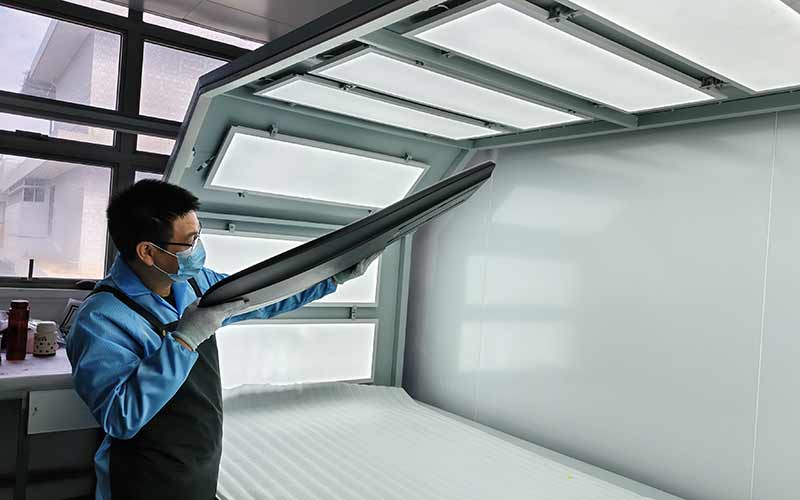
Typical applications may include helmets, rackets, high-end equipment shells, sports accessories, and lightweight performance parts. For premium consumer products, carbon fiber compression molding can help balance appearance, weight, strength, and repeatability.
Carbon Fiber Compression Molding vs Other Composite Processes

Different carbon fiber manufacturing processes are suitable for different production goals. The best choice depends on part geometry, performance requirement, volume, budget, surface quality, and tolerance requirement.

Carbon Fiber Compression Molding vs Autoclave Molding

Carbon fiber compression molding and autoclave molding are both important prepreg-based carbon fiber manufacturing processes, but they are typically selected for different production goals. The right choice depends on part design, performance requirements, production volume, budget, and quality expectations.

Comparison Item Carbon Fiber Compression Molding / PCM Autoclave Molding
Process principle Prepreg carbon fiber is placed into a heated mold and cured under compression pressure. Prepreg carbon fiber is vacuum bagged and cured inside an autoclave under heat and external pressure.
Main advantage Faster cycle time and better suitability for scalable production. Excellent laminate consolidation and very high composite quality.
Production efficiency Higher efficiency for batch production and automotive or industrial parts. Slower cycle time due to vacuum bagging, autoclave loading, curing, and cooling.
Cost structure More cost-effective for suitable medium- to high-volume parts. Higher processing cost due to equipment, labor, energy, and longer cycle time.
Dimensional repeatability High repeatability when tooling, pressure, and temperature are well controlled. Very high repeatability for precision aerospace-grade structures.
Surface quality Good surface quality with proper mold design and tooling control. Excellent surface and laminate quality, especially for high-performance parts.
Typical applications Automotive carbon fiber parts, industrial components, consumer products, molded panels, and OEM batch production. Aerospace structures, high-end racing components, demanding technical parts, and low-volume premium composite structures.
Best suited for Customers who need production efficiency, stable quality, and scalable manufacturing. Customers who prioritize maximum laminate quality and aerospace-grade performance.

Carbon Fiber Compression Molding vs Wet Layup

Wet layup is a more manual carbon fiber manufacturing process where dry fiber is placed into a mold and resin is applied during production. It can be practical for prototypes, low-volume parts, and large simple structures. Carbon fiber compression molding provides better process control because the resin content is already controlled in the prepreg, while the mold and press provide more stable forming conditions.

Comparison ItemCarbon Fiber Compression Molding / Prepreg Compression MoldingWet Layup
Material systemUses prepreg carbon fiber with pre-controlled resin content.Uses dry carbon fiber fabric and manually applied resin.
Process controlHigher control over resin content, fiber placement, thickness, and curing conditions.More dependent on operator skill and manual resin application.
Resin consistencyMore consistent because resin content is controlled before molding.More variable because resin is applied during production.
Dimensional repeatabilityBetter repeatability for molded parts and OEM production.Lower repeatability, especially for complex or batch-production parts.
Production efficiencyHigher efficiency for repeat production after tooling and process validation.Slower and more labor-intensive for repeated production.
Surface stabilityMore stable surface quality with proper tooling and process control.Surface quality can vary depending on resin application, vacuum control, and operator experience.
Initial costHigher tooling and setup cost than simple wet layup.Lower initial cost, especially for prototypes or simple structures.
Typical applicationsAutomotive parts, industrial carbon fiber components, molded panels, sports parts, and OEM/ODM projects.Prototypes, low-volume parts, large simple structures, and cost-sensitive applications.
Best suited forCustomers who need repeatability, production consistency, and scalable manufacturing.Customers who need lower initial cost, flexible prototyping, or low-volume production.

Prepreg Carbon Fiber Compression Molding vs General Compression Molding

General compression molding is a broad manufacturing category that can include many material systems, such as SMC, BMC, thermoplastics, wet composite systems, rubber, and prepreg-based composites. Prepreg carbon fiber compression molding is more specific because it refers to compression molding using prepreg carbon fiber materials. For Noah Composites, this distinction is important because our page focuses on high-performance carbon fiber manufacturing and OEM composite production.

Comparison Item Prepreg Carbon Fiber Compression Molding General Compression Molding
Process scope A specific carbon fiber molding process using prepreg materials. A broad molding category covering many materials and industries.
Material system Uses pre-impregnated carbon fiber prepreg with controlled resin content. May use SMC, BMC, thermoplastics, rubber, wet composites, or other molded materials.
Carbon fiber relevance Highly relevant to high-performance carbon fiber manufacturing. May or may not involve carbon fiber; often associated with plastics or lower-cost composite systems.
Resin control Resin content is pre-controlled in the prepreg before molding. Resin control depends on the material system, such as SMC, BMC, thermoplastic pellets, or wet resin application.
Typical performance level Suitable for lightweight, high-strength, dimensionally stable carbon fiber parts. Performance varies widely depending on material, mold design, and application.
Production goal Used for repeatable carbon fiber parts with good surface quality and structural consistency. Used for a wider range of molded products, from industrial plastic parts to composite panels.
Typical applications Automotive carbon fiber parts, industrial composite components, sports equipment, medical structures, and OEM carbon fiber parts. Plastic parts, SMC/BMC components, rubber products, thermoplastic parts, wet molded composites, and general molded products.
Best suited for Customers who need high-performance carbon fiber parts made from prepreg materials. Customers who need molded products across broader material systems and performance levels.

Quality Assurance for Carbon Fiber Compression Molding

Noah Composites supports carbon fiber compression molding with an in-house quality control system designed to improve consistency from material receiving to final shipment.

For carbon fiber compression molded parts, quality control may include:

  • Incoming material inspection
  • Prepreg storage and shelf-life checks
  • Cut ply inspection
  • Layup sequence verification
  • Mold condition checks
  • Process parameter monitoring
  • Dimensional inspection
  • Surface inspection
  • Final product inspection
  • Outgoing shipment inspection

Noah Composites applies a quality system that includes IQC, IPQC, FQC, and OQC. Production is supported by ISO9001-based quality management, and the company has AAA credit enterprise recognition. For customers, these quality signals help show that carbon fiber compression molding production is controlled through documented procedures rather than depending only on operator experience.

Quality control is especially important for OEM and ODM projects because molded carbon fiber parts often need stable dimensions, repeatable surface quality, accurate assembly interfaces, and reliable performance across different batches. By combining material inspection, process monitoring, final inspection, and outgoing inspection, Noah Composites helps reduce production risk and improve customer confidence.

Quality Assurance for Carbon Fiber Compression Molding

Why Choose Noah Composites for Carbon Fiber Compression Molding?

Noah Composites is a practical manufacturing partner for customers who need custom carbon fiber parts with stable quality and scalable production support. For carbon fiber compression molding projects, our strength comes from the combination of experience, facility scale, press equipment, process integration, and export manufacturing background.

Choose Noah Composites Carbon Fiber Compression Molding

Key compression molding-related advantages include:

  • More than 14 years of carbon fiber manufacturing experience
  • 32,000-square-meter integrated production facility
  • Export experience to more than 50 countries and regions
  • Manual and automatic compression molding press systems
  • Multi-layer hot press capability
  • 500-ton four-column heated hydraulic press equipment
  • Prepreg storage and automatic cutting support
  • In-house CNC trimming and finishing
  • OEM and ODM project support
  • ISO9001-based quality management

This combination matters because carbon fiber compression molding success depends on the full production chain. A press machine alone is not enough. The manufacturer must also control material storage, cutting, layup, tooling, temperature, pressure, curing, trimming, finishing, inspection, and packaging.

Noah Composites supports customers from design review to prototype development and mass production. Whether the project requires automotive carbon fiber parts, marine components, medical structures, sports equipment, or industrial lightweight parts, our team can help evaluate whether carbon fiber compression molding is the right process and how the design should be optimized for manufacturing.

FAQ About Carbon Fiber Compression Molding

Carbon fiber compression molding is a composite manufacturing process in which carbon fiber materials are placed into a heated mold and cured under pressure. When prepreg carbon fiber is used, the process is commonly called prepreg compression molding or PCM.

Not always. Carbon fiber compression molding is a broader term. Prepreg compression molding is a specific type of carbon fiber compression molding that uses pre-impregnated carbon fiber materials with controlled resin content.

Yes. PCM is suitable for many automotive carbon fiber parts because it provides good repeatability, efficient production cycles, stable dimensions, and scalable manufacturing potential.

PCM usually means Prepreg Compression Molding. It refers to a process where carbon fiber prepreg is placed into a mold and cured under heat and pressure using compression molding equipment.

Compression molding uses a heated mold and press pressure to form the part. Autoclave molding uses vacuum bagging and autoclave pressure during curing. Autoclave molding is often selected for aerospace-grade performance, while compression molding is often selected for better production efficiency and scalable manufacturing.

Carbon fiber compression molding is suitable for automotive parts, industrial components, molded panels, sports equipment, medical structures, marine products, and custom carbon fiber parts that require repeatability, stable dimensions, and efficient production.

Yes. Noah Composites supports OEM and ODM carbon fiber compression molding projects from design review and mold development to prepreg cutting, molding, CNC finishing, painting, assembly, inspection, and shipment.

Carbon fiber compression molding is used to produce lightweight, high-strength composite parts with stable dimensions and efficient production cycles. It is commonly applied in automotive parts, including exterior panels, interior trims, and structural components.

It is also used in UAV structures, robotics parts, marine components, sports equipment, and industrial lightweight products.

Scroll to Top
Tell Us Your Requirements
To get the information you need quickly
Contact Form for Inquiry