
Carbon Fiber Manufacturing Company & OEM/ODM Custom Composite Solution
Noah Composites is a professional carbon fiber manufacturing company based in China, operating a 32,000㎡ integrated production base with full OEM/ODM capabilities for automotive, marine, medical, and industrial applications. We provide end-to-end carbon fiber solutions including design, molding, CNC machining, painting, and quality inspection.
What Is Carbon Fiber Manufacturing?

Carbon fiber manufacturing is the process of producing lightweight, high-performance composite components by combining carbon fibers with resin systems through advanced composite manufacturing technologies. The resulting material, known as carbon fiber reinforced polymer (CFRP), combines the high strength and stiffness of carbon fibers with the flexibility and durability of polymer matrices.
CFRP manufacturing is widely used to produce structural and functional components that require excellent strength-to-weight ratio, dimensional stability, and resistance to fatigue and environmental conditions. Compared with traditional metal materials, carbon fiber composites enable significant weight reduction while maintaining high mechanical performance.
The purpose of carbon fiber manufacturing is to transform carbon fiber materials into customized composite parts with optimized performance through controlled fiber orientation, material selection, molding processes, and finishing techniques.
Carbon Fiber Manufacturing Process Overview
Carbon fiber manufacturing is a multi-stage process that transforms carbon fiber materials into high-performance composite components. Our integrated manufacturing process covers engineering design, material preparation, composite forming, machining, surface treatment, and quality inspection to ensure consistent performance and production reliability.

1.Design & Engineering Development
The manufacturing process starts with product design optimization and engineering evaluation. Our team works with customers to develop carbon fiber components that meet structural, functional, and manufacturing requirements.
Key capabilities include:
- CAD Modeling – Creating accurate 3D models and engineering drawings based on product requirements.
- Structural Analysis – Evaluating load conditions, fiber orientation, and composite performance to optimize part design.
- Mold Design – Developing customized molds and tooling solutions for different carbon fiber manufacturing processes.
- Manufacturing Feasibility Review – Assessing material selection, production methods, tolerances, and cost efficiency before production.

2. Material Preparation
Proper material selection and preparation are essential for achieving the required strength, weight, and performance of composite components.
Key processes include:
- Carbon Fiber Prepreg Selection – Selecting suitable prepreg materials based on strength, stiffness, temperature resistance, and application requirements.
- Carbon Fiber Fabric Preparation – Preparing carbon fiber fabrics according to required specifications and production processes.
- Resin System Selection – Choosing suitable resin systems to achieve desired mechanical properties and environmental performance.
- Material Cutting According to Layup Plan – Cutting carbon fiber materials according to fiber orientation, part geometry, and laminate design requirements.

3. Composite Layup and Preforming
Layup and preforming determine the fiber structure and mechanical performance of carbon fiber components. Proper fiber orientation ensures optimized strength and stiffness.
Key processes include:
- Fiber Orientation Arrangement – Arranging carbon fiber layers according to structural load requirements.
- Prepreg Layup – Applying carbon fiber prepreg layers manually or with assisted processes to achieve the designed laminate structure.
- Vacuum Bagging – Using vacuum bagging techniques in specific manufacturing processes to remove air and improve composite consolidation.

4. Carbon Fiber Molding and Curing
Molding and curing are the core manufacturing stages where carbon fiber materials are transformed into final composite shapes with stable mechanical properties.
Key processes include:
- Compression Molding – Using heat and pressure to form carbon fiber components with high efficiency and consistent quality.
- Autoclave Molding – Applying controlled temperature and pressure environments to produce high-performance composite parts.
- Resin Curing – Completing the resin cross-linking process to achieve the required strength, durability, and dimensional stability.
5. Carbon Fiber Trimming and Machining
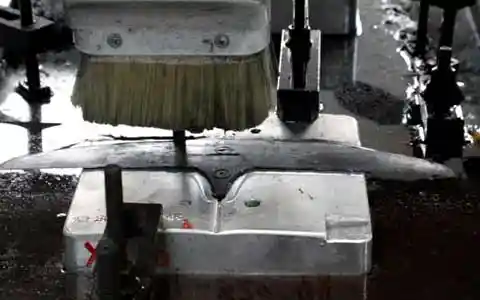
After molding and curing, composite parts require precision trimming and machining to achieve final dimensions, assembly requirements, and surface accuracy.
Key processes include:
- CNC Machining – Performing precision machining operations for complex geometries, holes, and dimensional requirements.
- Precision Trimming – Removing excess material and achieving accurate part edges.
- Drilling and Edge Cutting – Creating mounting holes and refining component profiles.
- Manual Finishing – Applying skilled manual processing for areas requiring additional adjustment.
- Hand Trimming and Manual Sanding – Refining edges and surfaces to meet appearance and assembly requirements.
- Deburring – Removing sharp edges and machining residues to improve safety and product quality.

6. Carbon Fiber Surface Treatment and Finishing
Surface treatment improves the appearance, durability, and functional performance of carbon fiber components. Different finishing methods can be applied depending on customer requirements.
Key processes include:
- Surface Preparation – Sanding, surface roughening, and cleaning to remove imperfections and improve coating adhesion for further processing.
- Surface Coating – Applying painting, clear coating, and protective coatings to enhance appearance, durability, and environmental resistance.
- Appearance Finishing – Creating gloss, matte, and carbon fiber weave finishes based on customer requirements and appearance specifications.

7. Inspection & Quality Control
Quality control is integrated throughout the manufacturing process to ensure every carbon fiber component meets customer specifications and performance requirements.
Key inspection processes include:
- Dimensional Inspection – Verifying component dimensions, tolerances, and assembly accuracy.
- Visual Inspection – Checking surface appearance, defects, and manufacturing consistency.
- Surface Inspection – Evaluating surface quality, coating condition, and finishing results.
- Mechanical Testing – Testing strength, durability, and material performance when required.
Carbon Fiber Manufacturing Technologies

Carbon Fiber Compression Molding Process
Carbon fiber compression molding is a high-efficiency production method designed for large-scale manufacturing.
Key advantages:
- High production efficiency
- Stable dimensional accuracy
- Suitable for automotive structural parts
- Ideal for mass production programs
Typical applications:
Automotive interior & exterior parts, structural reinforcement components
Learn more: Carbon Fiber Compression Molding

Autoclave Molding Process
Autoclave molding is used for high-performance and high-strength composite parts.
Key advantages:
- Aerospace-grade structural strength
- Low void content
- Excellent surface finish quality
- High mechanical performance
Typical applications:
High-end automotive components, marine performance parts, premium structural parts
Learn more: Autoclave Manufacturing

CNC Machining for Carbon Fiber Parts
We provide high-precision CNC machining services with tolerance up to ±0.02mm.
Capabilities:
- 5-axis CNC machining
- Complex geometry processing
- High-precision trimming & finishing
- Batch production consistency
Typical applications:
high-end automotive components, UAV and drone structures, robotics and automation systems, etc.
Learn more: Carbon Fiber CNC Machining
Custom Carbon Fiber Parts Manufacturing
Whether you need a functional prototype, low-volume production, or full-scale OEM manufacturing, Noah Composites provides complete custom carbon fiber manufacturing services tailored to your project requirements.
From initial engineering consultation and tooling development to production, quality inspection, and final delivery, our experienced team works closely with customers to ensure every component meets the required performance, appearance, and dimensional standards.
End-to-End Custom Manufacturing Services
From product design support and engineering evaluation to prototype manufacturing, testing, tooling development, mass production, and final quality inspection, every stage is managed under one roof. Unlike manufacturers that outsource critical processes, Noah completes everything—from raw material preparation to finished carbon fiber parts—within our 32,000 m² manufacturing facility. This fully integrated production system enables better quality control, faster lead times, improved communication, and consistent product performance. Our one-stop manufacturing capabilities include: Product design & engineering support Material selection consultation Prototype manufacturing Mechanical and fitment testing Mold design and tooling development Carbon fiber molding and CNC machining Surface finishing and quality inspection Global OEM and ODM manufacturing services
Prototype Manufacturing
Fast and reliable prototype development helps shorten product development cycles and reduce engineering risks before mass production. Our prototype manufacturing service is ideal for: Product validation Functional testing Vehicle fitment verification Design optimization Customer approval samples Our engineering team works closely with customers to optimize manufacturability while maintaining the intended design and performance objectives. Rapid prototyping allows design improvements to be identified early, reducing overall development costs and accelerating time to market.
Low-Volume Production
For aftermarket brands, startup companies, and new product launches, Noah Composites provides flexible low-volume carbon fiber manufacturing solutions. Our low-volume production services are suitable for: Automotive aftermarket products Limited edition performance parts Product launch programs Market validation projects Replacement carbon fiber components With flexible production scheduling and strict quality control, customers can enter the market quickly while maintaining premium product quality without committing to large production volumes.
High-Volume Manufacturing
When your project moves into mass production, Noah provides scalable manufacturing capacity with stable quality and reliable delivery. Our high-volume manufacturing capabilities include: Dedicated production lines Standardized manufacturing processes Automated quality inspection procedures Consistent dimensional accuracy Stable production scheduling Global shipment support Our integrated production system ensures every carbon fiber component maintains consistent appearance, structural integrity, and performance across every production batch.
Drawing-Based Manufacturing
Already have a design? Noah Composites can manufacture custom carbon fiber parts directly from your technical drawings or 3D models. We support multiple engineering file formats, including: 2D Drawings (PDF, DWG) 3D CAD Files STEP (.stp) IGES (.igs) SolidWorks Other common engineering formats Before production begins, our engineering team performs a comprehensive Design for Manufacturability (DFM) review to evaluate: Design feasibility Structural performance Moldability Production stability Material selection Cost optimization Assembly compatibility Manufacturing efficiency If improvements are recommended, we work closely with your engineering team to optimize the design before tooling begins, helping reduce manufacturing risks while improving long-term production consistency.
Custom Tooling Development
High-quality tooling is the foundation of precision carbon fiber manufacturing. Noah Composites designs and manufactures custom molds in-house to ensure optimal part quality and production efficiency. Our tooling capabilities include: Mold design and engineering CNC precision machining Prototype tooling Production tooling Mold validation and trial production Tool maintenance and optimization By controlling tooling development internally, we can shorten development lead times while ensuring higher dimensional accuracy and repeatable manufacturing performance.
Industries We Support
Our custom carbon fiber manufacturing services support customers across a wide range of industries where lightweight construction, high strength, and premium appearance are essential. We manufacture carbon fiber components for: Automotive Motorsports Marine Sporting Goods Aerospace Medical Devices Industrial Equipment Consumer Products Whether you're developing performance automotive components, marine accessories, sports equipment, or industrial composite solutions, Noah Composites provides engineering support and scalable manufacturing tailored to your industry requirements.
Start Your Custom Carbon Fiber Project
Whether you already have complete engineering drawings or are still developing your concept, our engineering team is ready to help. Simply send us your CAD files, technical drawings, or project requirements, and we'll provide a free engineering evaluation covering: Design feasibility assessment Material recommendations Manufacturing process suggestions DFM optimization advice Estimated tooling solution Production planning recommendations From prototypes to full-scale OEM production, Noah Composites delivers reliable custom carbon fiber manufacturing backed by advanced equipment, experienced engineers, and strict quality control.
Carbon Fiber Materials & Composite Specifications
Carbon fiber component performance depends on the complete carbon fiber material system, including the fiber grade, reinforcement form, resin system, fiber orientation, laminate construction, and core material. At Noah Composites, materials are selected according to the customer’s drawings, structural requirements, operating environment, manufacturing process, surface expectations, production volume, and target cost.
Carbon Fiber Grades
| Typical fiber grade | Performance category | Tensile strength | Tensile modulus | Elongation | Density | Typical selection focus |
|---|---|---|---|---|---|---|
| T300 | Standard modulus | 3,530 MPa | 230 GPa | 1.5% | 1.76 g/cm³ | Balanced performance, good processability, general industrial and cosmetic parts |
| T700S | High-strength standard modulus | 4,900 MPa | 230 GPa | 2.1% | 1.80 g/cm³ | Higher tensile strength without a major increase in modulus |
| T800S | High-strength intermediate modulus | 5,880 MPa | 294 GPa | 2.0% | 1.80 g/cm³ | Higher strength and stiffness for weight-sensitive structural parts |
| M40J | High modulus | 4,400 MPa | 377 GPa | 1.2% | 1.77 g/cm³ | High stiffness, low deformation, and dimensional-stability-critical applications |
The values above are typical fiber properties published by the material manufacturer and are provided for general material comparison only. They are not guaranteed finished-part properties. Actual component performance also depends on resin selection, fiber volume, layup orientation, laminate quality, curing conditions, geometry, and manufacturing control.
T300 and T700S have the same typical tensile modulus of 230 GPa, but T700S offers substantially higher tensile strength. T800S increases both strength and modulus, while M40J is selected primarily for its much higher stiffness rather than maximum tensile strength. Toray classifies T300 and T700S as standard-modulus fibers, T800S as intermediate modulus, and M40J as high modulus. this information from Toray.
Carbon Fiber Reinforcement Forms
| Material form | Main characteristics | Typical use |
|---|---|---|
| Unidirectional carbon fiber | Fibers mainly aligned in one direction | High strength and stiffness along a defined load path |
| Plain-weave fabric | Stable woven structure with balanced directions | General parts, tight patterns, and visible surfaces |
| Twill-weave fabric | Good drapeability and recognizable carbon appearance | Curved components and cosmetic carbon fiber products |
| Multiaxial fabric | Multiple fiber directions assembled without conventional weaving | Structural laminates requiring controlled directional performance |
| Carbon fiber prepreg | Fiber pre-impregnated with a controlled resin content | Autoclave, compression molding, and repeatable high-quality production |
| Dry carbon fiber fabric | Reinforcement supplied without pre-applied resin | Resin infusion, vacuum molding, and wet-processing methods |
The reinforcement form is selected according to part geometry, load direction, surface requirements, drapeability, laminate thickness, production quantity, and molding process.
Resin Systems
| Resin system | Main characteristics | Typical use |
|---|---|---|
| Standard epoxy resin | Good adhesion, low shrinkage, and balanced mechanical performance | General structural and industrial carbon fiber products |
| Toughened epoxy resin | Improved damage and impact tolerance | Parts exposed to vibration, impact, or demanding structural loads |
| High-temperature epoxy resin | Higher thermal resistance and dimensional stability | Components exposed to elevated operating or curing temperatures |
| Infusion-grade epoxy resin | Controlled viscosity and resin-flow characteristics | Vacuum infusion and resin-transfer processes |
| Cosmetic-grade resin system | Selected for surface clarity and appearance | Visible carbon fiber components |
| Application-specific resin | Selected for chemical, fire, environmental, or processing requirements | Customer-defined or specialized applications |
Resin selection is based on cure temperature, service temperature, mechanical performance, toughness, environmental exposure, surface quality, process compatibility, and post-curing requirements.
Fiber Orientation and Laminate Construction
| Ply orientation | Primary function |
|---|---|
| 0° | Longitudinal strength and stiffness |
| 90° | Transverse stability and cross-direction reinforcement |
| +45° / −45° | Shear and torsional load resistance |
| Local reinforcement | Additional support around holes, inserts, joints, and high-stress areas |
A laminate may combine different ply angles, material forms, and local reinforcements according to the product’s load path and geometry.
Final performance depends on the complete stacking sequence, ply count, laminate symmetry, fiber content, resin distribution, cure quality, and component design—not only on the individual fiber grade.
Core Materials for Sandwich Structures
| Core material | Typical density range | Typical compressive strength | Typical shear strength | Common applications | Selection considerations |
|---|---|---|---|---|---|
| PVC foam | 40–250 kg/m³ | 0.4–6.5 MPa | 0.4–3.5 MPa | Marine panels, vehicle components, sports equipment, wind-energy structures and industrial sandwich panels | Good general-purpose option. Grade selection depends on required load, temperature, water resistance, resin compatibility and processing pressure. |
| PET foam | 60–250 kg/m³ | 0.6–5.5 MPa | 0.4–2.5 MPa | Automotive panels, marine structures, wind-energy components, transportation products and general sandwich construction | Thermoplastic and recyclable options are available. Resin uptake, processing temperature and dimensional stability should be reviewed by grade. |
| PMI foam | 30–200 kg/m³ | 0.4–8.0 MPa | 0.4–4.0 MPa | Aerospace-type structures, UAV components, high-performance sports products, precision shells and autoclave-cured sandwich parts | Commonly selected for high stiffness, dimensional stability and elevated-temperature processing. Cost and cure-cycle compatibility require consideration. |
| Rigid PU foam | 80–320 kg/m³ | 0.7–12 MPa | 0.5–6.0 MPa | Machined cores, complex internal shapes, structural inserts, equipment components, tooling and application-specific sandwich structures | PU properties vary significantly by formulation. Density, closed-cell structure, operating temperature, moisture resistance and resin compatibility must be confirmed. |
| Aramid honeycomb | 24–160 kg/m³ | 0.5–7.0 MPa | 0.3–3.5 MPa | Lightweight panels, aerospace interiors, UAV structures, radomes, racing components and high-performance composite shells | Mechanical properties are directional and depend on cell size, density and ribbon direction. Edge sealing and local reinforcement may be required. |
| Aluminum honeycomb | 30–200 kg/m³ | 0.7–12 MPa | 0.5–6.0 MPa | High-stiffness panels, transportation structures, industrial equipment, tooling tables and precision sandwich assemblies | Offers high stiffness-to-weight performance, but corrosion protection, electrical conductivity, edge closure and compatibility with carbon fiber must be evaluated. |
| End-grain balsa | 80–300 kg/m³ | 4–25 MPa | 1.5–5.5 MPa | Marine hulls, decks, wind-turbine structures, transportation floors and load-bearing sandwich panels | Provides relatively high compressive and shear performance. Moisture protection, density variation, resin absorption and sealing are important considerations. |
| Customer-specified core materials | Project-specific | Project-specific | Project-specific | Specialized composite structures designed around customer drawings, testing standards or approved material specifications | Final properties must be confirmed from the selected supplier’s technical data sheet and validated against the manufacturing process. |
Carbon Fiber Products & Application Industries

Automotive Carbon Fiber Manufacturing
We produce OEM automotive carbon fiber components for global brands.
Products:
- Aerodynamic body kits
- Interior & exterior trim parts
- Structural reinforcement panels
- Lightweight performance parts

Marine & Water Sports Composite Manufacturing
We manufacture high-performance marine composite structures.
Products:
- Hydrofoils
- Surfboards
- Paddle systems
- Sailing structural components

Medical & Rescue Carbon Fiber Equipment
Lightweight composite solutions for emergency and healthcare applications.
Products:
- Carbon fiber stretchers
- Rescue ladders
- Mobility assistance equipment

Industrial Custom Carbon Fiber Manufacturing
We support full custom engineering solutions.
Applications:
- UAV / drone structures
- Robotics components
- Industrial automation parts
- Sports equipment
- High-performance lightweight structures
Factory Capability & Manufacturing Capacity
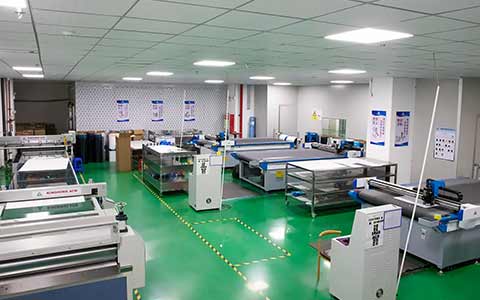
Noah Composites operates a 32,000 m² integrated carbon fiber manufacturing facility, covering the complete production process from material preparation to finished-product delivery.
Our in-house workflow includes carbon fiber yarn and material preparation, cold storage, automated fabric and prepreg cutting, core preforming and CNC core machining, layup and rolling, composite molding, CNC finishing, sanding, coating, labeling, laser engraving, quality inspection, packaging, and logistics.
By integrating these processes within one production base, we reduce dependence on external suppliers, shorten communication cycles, and maintain better control over quality, traceability, production scheduling, and delivery.


Manufacturing Equipments
| Manufacturing area | Equipment and capacity | Main functions |
|---|---|---|
| Compression molding | 27 multi-layer compression presses; maximum platen size up to 2.2 × 1.65 m | Carbon fiber compression molding, foaming, laminating, consolidation, and batch production |
| Carbon fiber CNC machining | 22 CNC machines, including 21 three-axis machines and 1 five-axis machine | Trimming, drilling, milling, slotting, profiling, and machining of carbon fiber parts up to approximately 1,100 mm |
| CNC machining accuracy | Up to ±0.02 mm under suitable geometry, material, datum, and fixturing conditions | Precision holes, interfaces, profiles, slots, and repeatable assembly features |
| Core material machining | 5 CNC core-machining machines | Profiling, contouring, grooving, pocketing, and shaping foam or structural cores for sandwich composites |
| Autoclave molding | 2 large autoclaves, supporting parts up to approximately 2.5 m wide and 5 m long | Prepreg curing, vacuum consolidation, structural and large-format carbon fiber components |
| Carbon fiber material cutting | 1 multi-angle carbon fabric cutting machine and 3 CNC AI automatic cutting machines | Accurate ply cutting, nesting, multi-angle preparation, improved material utilization, and repeatable layup preparation |
| Edge finishing | 2 wet edge-milling machines | Burr removal, loose-fiber treatment, fuzzy-edge finishing, dust reduction, and edge-quality improvement |
| Surface preparation | 2 sandblasting machines | Surface cleaning, coating preparation, bonding preparation, and controlled surface treatment |
| Hole processing | 3 drilling machines | Hole preparation, secondary drilling, assembly-hole processing, and production support |
| Clean coating | Class 100,000 clean coating area | Painting, clear coating, protective coating, and cosmetic finishing under controlled conditions |
| Identification and finishing | Labeling and laser-engraving equipment | Serial numbers, QR codes, logos, batch identification, and traceability marking |
Equipment suitability and maximum processing dimensions depend on product geometry, fixture size, tooling access, process conditions, and project specifications.
Compression Molding Capacity
Our 27 multi-layer compression presses support both prototype development and scalable production of carbon fiber components. With platen sizes up to 2.2 × 1.65 m, the equipment can support a wide range of products, including: Automotive exterior and interior components Carbon fiber aero kits Battery covers Marine and hydrofoil parts Sports equipment Medical and rescue products Industrial composite shells Foam-core and sandwich structures Custom molded carbon fiber products Multiple presses allow different projects, tooling sets, temperatures, pressures, and cycle times to be scheduled in parallel.
Autoclave Manufacturing Capacity
Our two large autoclaves support carbon fiber prepreg components up to approximately:
2.5 m maximum width
5 m maximum length
Autoclave processing is suitable for components requiring controlled temperature, vacuum, pressure, laminate consolidation, and reduced void content.
Typical applications include:
Large marine components
Hydrofoil structures
Automotive panels
UAV and robotic structures
Industrial shells
Lightweight sandwich components
High-performance custom composite products
Final usable dimensions depend on tooling, vacuum-bag configuration, loading arrangement, and curing requirements.
CNC and Secondary Processing Capacity
Our CNC department includes: 21 three-axis CNC machines 1 five-axis CNC machine 5 CNC core-machining machines 2 wet edge-milling machines 3 drilling machines For suitable components and controlled fixturing conditions, CNC machining accuracy can reach up to ±0.02 mm. We can process carbon fiber parts up to approximately 1,100 mm, depending on: Product length, width, and height Fixture dimensions Machine travel Tool access Surface curvature Datum selection Required tolerance Number of machining setups Five-axis machining supports curved components, multi-angle features, complex shells, and parts requiring reduced repositioning.
Automated Material Preparation
Material preparation is an important part of repeatable carbon fiber production. Our cutting capability includes: 1 multi-angle carbon fiber fabric cutting machine 3 CNC AI automatic cutting machines These systems support: Carbon fiber fabric cutting Prepreg ply cutting Multi-angle ply preparation CAD-based cutting patterns Automatic nesting Improved material utilization Reduced manual cutting variation Repeatable ply dimensions Controlled preparation for batch layup Automated cutting helps ensure that the approved ply shape, orientation, and quantity are transferred consistently into production.
Production Capacity
Our integrated equipment and production system supports prototype, small-batch, and volume manufacturing.
| Product category | Reference production capacity |
|---|---|
| Hydrofoil systems | Up to 7,000 sets |
| Automotive aero kits and exterior components | Up to 3,000 sets |
| Other custom carbon fiber products | Up to 2,000 sets |
These figures represent reference production capacity. Actual output depends on product size, complexity, molding cycle, tooling quantity, finishing requirements, inspection standards, and product mix.
Engineering Team
Noah Composites has a 12-person engineering team supporting projects from initial evaluation through production launch.
The team is responsible for:
- Project feasibility evaluation
- Material and process selection
- Structural layup review
- 2D drawing and 3D CAD preparation
- Tooling and fixture coordination
- CNC programming support
- Sample development
- Production SOP development
- Labeling and traceability planning
- Performance testing
- First-article validation
- Mass-production improvement
Our team has 5 staff with 10+ years’ experience, 5 with 5+ years’, and 2 juniors under 3 years.
OEM / ODM Carbon Fiber Manufacturing Services
We offer full-spectrum OEM and ODM manufacturing support covering product engineering design, 3D modeling, prototyping, mold development, small-batch trial runs and mass production expansion, alongside dedicated global export services. Our solutions serve automotive brands, industrial manufacturers, engineering firms and emerging startups alike.

Product Development
Turn your concept into a manufacturable carbon fiber product with Noah's engineering support. Our team assists with design optimization, material selection, laminate structure, DFM (Design for Manufacturing), and cost analysis to ensure your product is ready for efficient production. Whether you need OEM manufacturing or a complete ODM solution, we help reduce development risks while accelerating time to market.

Prototype Manufacturing
Validate your design with high-quality carbon fiber prototypes produced using the same manufacturing technologies as mass production. From single prototypes to small pilot batches, we provide rapid turnaround, engineering feedback, and functional testing support, allowing you to verify performance before investing in production tooling.

Mold Development
Precision tooling is the foundation of consistent composite manufacturing. Noah designs and manufactures custom carbon fiber molds for compression molding, prepreg layup, RTM, vacuum infusion, and CNC trimming. Our in-house tooling capabilities ensure high dimensional accuracy, repeatability, and long mold life for both prototype and production applications.

Mass Production
Scale your project with confidence through our end-to-end carbon fiber mass production services. Operating from a 32,000㎡ manufacturing facility, we manage raw material processing, molding, CNC machining, surface finishing, quality inspection, and final assembly under one roof. Our flexible production capacity supports both low-volume and high-volume OEM manufacturing while maintaining consistent quality and on-time delivery.
Quality Control & Certifications
We operate a full-process carbon fiber quality control system ensuring consistent manufacturing quality.
Certifications:
a. ISO9001 Quality Management System b. AAA Credit Enterprise Certification c. High-tech enterprise certification
Quality System:
a. IQC Incoming Quality Control b. IPQC In-Process Quality Control c. FQC Final Inspection d. OQC Outgoing Inspection


Why Choose Noah Composites as Your Carbon Fiber Manufacturing Partner
14+ Years Experience
14+ years of expertise in carbon fiber manufacturing and engineering excellence.
32,000㎡ Production Facility
32,000㎡ integrated production base for stable and efficient large-scale manufacturing.
200+ Professional Team
200+ skilled engineers and production staff ensuring precision and quality control.
300+ Global Customers
Serving 300+ customers across 50+ countries with trusted long-term partnerships.
Full In-House Production
Complete in-house manufacturing from materials to finished carbon fiber products.
OEM/ODM System
Stable OEM/ODM system supporting consistent quality and scalable mass production.
Carbon Fiber Manufacturing Case Studies

High-Performance Automotive Aerodynamic Kits for the SU7 Platform
Designed for performance and precision, our custom aerodynamic kits for the SU7 platform combine lightweight composite engineering with optimized airflow management. From front splitters and side skirts to rear diffusers and spoilers, every component is manufactured for exceptional fit, durability, and visual impact.

Premium Carbon Fiber Components for Zeekr 001
We manufacture high-quality carbon fiber exterior and functional components for the Zeekr 001, delivering reduced weight, enhanced strength, and a premium appearance. Every part is produced using advanced composite processes to ensure consistent quality and OEM-level fitment.

Precision Composite Manufacturing for Hydrofoil Systems
Our hydrofoil manufacturing capabilities combine advanced composite materials with precision engineering to produce lightweight, high-strength foil structures. We support prototype development and volume production for marine performance applications with strict quality control throughout the manufacturing process.

Custom Composite Solutions for Industrial Applications
From concept to production, we design and manufacture custom composite structures for a wide range of industrial applications. Leveraging carbon fiber, fiberglass, and hybrid materials, we provide lightweight, corrosion-resistant, and high-performance solutions tailored to your engineering requirements.
Contact us to explore more of our custom engineering and composite manufacturing projects.
FAQ
Carbon fiber manufacturing is the process of producing composite components by combining carbon fibers with polymer matrices. The process typically includes material preparation, layup, molding, curing, machining, and surface finishing. Manufacturers use different technologies such as compression molding, autoclave curing, and resin infusion depending on performance requirements and production volume.
Carbon fiber is widely used in automotive, aerospace, marine, medical, sports, and industrial manufacturing.
Yes. We provide full OEM/ODM services including design, prototyping, tooling, and mass production.
We achieve precision up to ±0.02mm for CNC machining of composite components.
Carbon fiber offers a significantly higher strength-to-weight ratio compared to metals like steel or aluminum. It is also corrosion-resistant, fatigue-resistant, and allows for complex aerodynamic and structural designs that are difficult to achieve with traditional materials.
Yes. Carbon fiber manufacturing is highly customizable in terms of geometry, layering orientation, surface finish, and structural reinforcement. Custom tooling and layup strategies allow parts to be engineered for specific performance or aesthetic requirements.
Carbon fiber composites can be up to five times stronger than steel while being significantly lighter. However, performance depends on fiber orientation, resin system, and manufacturing process, which is why precise engineering control is essential.
Yes. Carbon fiber manufacturing supports both prototyping and low-volume production. This is especially important for automotive, robotics, and industrial clients who require fast iteration before scaling to mass production.
Carbon fiber itself has excellent thermal stability, but overall performance depends on the resin system used. With appropriate resin selection, carbon fiber composites can perform well under high-temperature, corrosive, and mechanically demanding conditions.
Quality control is maintained through strict process monitoring, including fiber alignment, resin distribution, curing conditions, and post-processing inspection. Each stage is controlled to ensure consistent mechanical performance and structural integrity.
Noah Composites offers a comprehensive range of carbon fiber manufacturing processes to meet different product requirements and production volumes. Our capabilities include prepreg compression molding, autoclave molding, resin transfer molding (RTM), vacuum infusion, CNC machining, adhesive bonding, and precision finishing. Based on your product design, mechanical requirements, and target cost, our engineering team will recommend the most suitable manufacturing process for your project.
Our minimum order quantity depends on the manufacturing process and product complexity. For prototype projects, we can produce as few as one piece. For production orders, MOQ varies according to tooling requirements, material selection, and manufacturing methods. We support both low-volume production for market validation and high-volume OEM manufacturing for long-term supply. Contact our engineering team for a quotation based on your project requirements.
Prototype lead time depends on the part geometry, manufacturing process, and tooling requirements. In general, simple prototypes can be completed within 2–4 weeks, while projects requiring new molds or complex assemblies may take 4–8 weeks. Noah Composites works closely with customers throughout the prototyping process to optimize design, verify performance, and prepare the product for efficient mass production.
Contact & OEM Inquiry
Looking for a reliable carbon fiber manufacturer in China?
We provide:
- OEM carbon fiber parts
- Custom composite manufacturing
- Engineering support
- Mass production solutions
Contact us for quotation & technical support


