Carbon fiber modulus describes the stiffness of a carbon fiber and is one of the key mechanical properties engineers consider when selecting reinforcement materials for composite structures. Measured in gigapascals (GPa), tensile modulus indicates how much a carbon fiber deforms under tensile stress within its elastic range.
Higher modulus generally means that a fiber undergoes less elastic deformation under the same tensile stress. However, higher carbon fiber modulus does not automatically mean higher tensile strength, better impact resistance, or better overall composite performance. The right material depends on the specific requirements of the finished composite part.
This guide explains carbon fiber modulus, the differences between standard, intermediate, and high modulus carbon fibers, the relationship between modulus and tensile strength, and how engineers can select the appropriate carbon fiber grade for structural composite applications.
What Is Carbon Fiber Modulus?
Carbon fiber modulus, also known as Young’s modulus, elastic modulus, or tensile modulus, is a measure of a carbon fiber’s stiffness in tension. It describes the relationship between tensile stress and tensile strain in the elastic region of the material.
The basic relationship is:
E = σ / ε
Where:
- E = Young’s modulus
- σ = tensile stress
- ε = tensile strain
Carbon fiber modulus is normally expressed in GPa (gigapascals). It can also be reported in Mpsi (million pounds per square inch).
In simple terms, a higher modulus carbon fiber experiences less elastic deformation when subjected to the same tensile stress. This characteristic makes high-modulus carbon fibers attractive for applications where structural stiffness, dimensional stability, and stiffness-to-weight performance are important.
For example, a carbon fiber with a tensile modulus of 300 GPa is intrinsically stiffer in tension than a fiber with a tensile modulus of 230 GPa, assuming the measurements are made under comparable test conditions.
It is important to distinguish fiber modulus from the modulus of a finished carbon fiber composite. The stiffness of a composite laminate also depends on fiber orientation, fiber volume fraction, resin properties, laminate thickness, stacking sequence, and manufacturing quality.
Carbon Fiber Modulus Categories
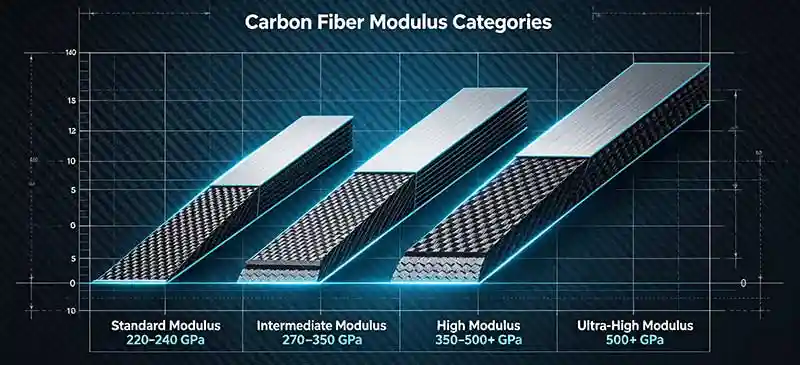
Carbon fibers are commonly grouped into standard modulus, intermediate modulus, high modulus, and in some cases ultra-high modulus grades.
There is no single universal classification system that defines exactly the same modulus boundaries for every carbon fiber manufacturer. Actual values depend on the fiber grade, manufacturing process, and technical specification.
The following categories provide a practical engineering reference.
Standard Modulus Carbon Fiber
Standard modulus carbon fiber is the most widely used class for general structural composite applications. Typical tensile modulus values are approximately 220–240 GPa, although individual fiber grades may fall outside this range.
Standard modulus fibers offer a practical balance of stiffness, tensile strength, strain-to-failure, availability, and material cost. This makes them suitable for a wide range of automotive, industrial, sporting goods, marine, and general composite applications.
Typical applications include:
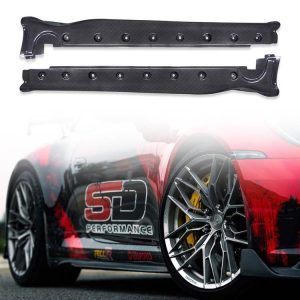
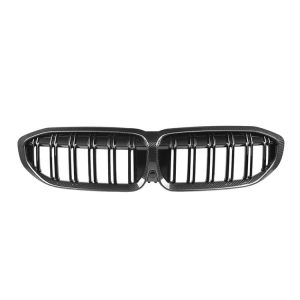
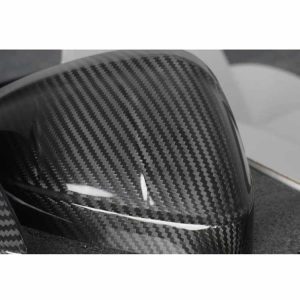
- Automotive carbon fiber body panels
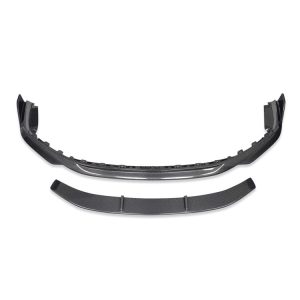
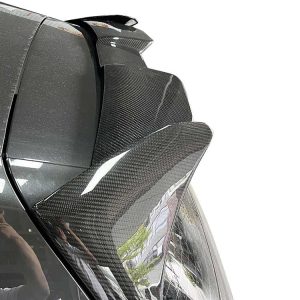
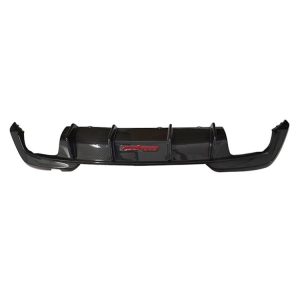
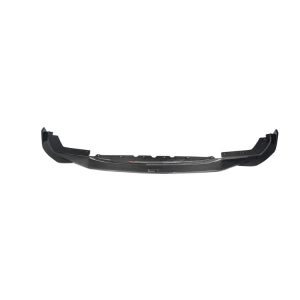
- Hoods, spoilers, diffusers, and aerodynamic components
- Industrial composite structures
- Sporting goods
- Marine components
- General structural parts
For many applications, standard modulus carbon fiber provides sufficient stiffness without the additional material cost associated with higher modulus grades.
Intermediate Modulus Carbon Fiber
Intermediate modulus carbon fiber provides greater stiffness than standard modulus material while generally retaining more strain capability than many high modulus fibers.
Typical tensile modulus values are often in the range of approximately 270–350 GPa, depending on the fiber grade and manufacturer.
Intermediate modulus carbon fiber can be considered when a design requires increased stiffness without moving directly to the lowest-strain high modulus materials.
Potential applications include:
- High-performance automotive components
- Bicycle frames and components
- Drone and UAV structures
- Sporting equipment
- Pressure vessels
- Weight-sensitive structural components
The selection of intermediate modulus fiber should still consider tensile strength, strain-to-failure, impact requirements, and the laminate design rather than modulus alone.
High Modulus Carbon Fiber
High modulus carbon fiber provides substantially higher stiffness than standard modulus grades. Depending on the fiber series and manufacturer, tensile modulus can range from approximately 350 GPa to more than 500 GPa, with some specialized fibers reaching even higher values.
The primary advantage of high modulus carbon fiber is its exceptional axial stiffness. These materials are particularly useful when minimizing elastic deformation or maintaining dimensional stability is more important than maximizing strain-to-failure.
High modulus carbon fiber may be used in:
- Aerospace structures
- Satellite components
- Precision structures
- Space-related applications
- High-performance sporting equipment
- Stiffness-critical automotive components
One important trade-off is that high modulus fibers commonly have lower strain-to-failure than many standard modulus and high-strength carbon fibers. Therefore, selecting the highest available modulus is not necessarily the best solution for components exposed to impact, crash loads, or significant deformation.
Ultra-High Modulus Carbon Fiber
Some specialized carbon fiber products are classified as ultra-high modulus because their tensile modulus extends significantly beyond conventional high-modulus ranges.
These materials are designed for highly specialized applications where extremely high stiffness and dimensional stability are critical. They can be considerably more expensive and may require careful laminate design and manufacturing control.
Ultra-high modulus carbon fiber is generally selected only when the mechanical requirements justify the additional material and processing costs.
Carbon Fiber Modulus vs. Tensile Strength
One of the most important concepts in carbon fiber material selection is the difference between modulus and tensile strength.
They describe different mechanical properties.
| Property | What It Measures | Higher Value Generally Means |
|---|---|---|
| Tensile Modulus | Resistance to elastic deformation | Greater stiffness |
| Tensile Strength | Maximum tensile stress before failure | Higher load-bearing capability before fracture |
| Strain to Failure | Deformation before fiber failure | Greater deformation capacity |
A carbon fiber can have a very high modulus without having the highest tensile strength.
For example, high modulus fibers are designed primarily to maximize stiffness. Some high-strength carbon fibers, in contrast, are optimized to withstand high tensile loads while maintaining a useful strain-to-failure.
Therefore:
Higher carbon fiber modulus does not necessarily mean higher carbon fiber strength.
Engineers should evaluate modulus and tensile strength together according to the structural requirements of the application.
For a stiffness-driven component, modulus may be one of the most important properties. For a strength- or impact-driven component, tensile strength, strain-to-failure, fracture behavior, and laminate design may be equally or more important.
How Carbon Fiber Modulus Affects Composite Performance
Carbon fiber modulus is an important factor in composite performance, but the modulus of the reinforcement is only one part of the final material system.
Fiber Modulus vs. Laminate Modulus
The tensile modulus of the carbon fiber should not be confused with the modulus of the finished composite laminate.
A carbon fiber composite consists of reinforcement and matrix. Its mechanical behavior depends on several factors, including:
- Carbon fiber modulus
- Fiber volume fraction
- Fiber orientation
- Resin modulus
- Fiber-resin interface
- Laminate thickness
- Ply stacking sequence
- Manufacturing quality
- Void content
A unidirectional laminate with fibers aligned with the applied load can have dramatically different stiffness from a laminate containing multiple off-axis fiber orientations, even when both use the same carbon fiber.
For this reason, composite engineers should evaluate the laminate properties and not simply select a fiber based on its modulus value.
Structural Stiffness
Higher modulus carbon fiber can reduce elastic deformation under a given tensile load.
This is particularly useful for components where excessive deflection can affect:
- Dimensional accuracy
- Aerodynamic performance
- Mechanical alignment
- Vibration behavior
- Structural clearances
- Load transfer
However, final component stiffness depends on the complete laminate architecture.
Weight Reduction
High modulus carbon fiber can provide excellent stiffness-to-weight performance in stiffness-driven designs.
When a component is limited primarily by stiffness rather than strength, a higher modulus reinforcement may allow engineers to achieve a required stiffness target with less structural material.
However, actual weight savings depend on the complete design. Strength requirements, safety factors, impact resistance, laminate orientation, manufacturing constraints, and minimum wall thickness can all limit how much material can be removed.
Therefore, high modulus carbon fiber should be viewed as a tool for optimizing stiffness-to-weight performance rather than an automatic weight-reduction solution.
Dimensional Stability and Thermal Expansion
Carbon fibers generally have very low axial coefficients of thermal expansion, and some high-modulus carbon fibers exhibit particularly low or negative axial thermal expansion.
This can be valuable for precision composite structures that must maintain dimensional stability across temperature changes.
However, the thermal expansion behavior of a finished composite depends on fiber orientation, resin properties, laminate construction, and environmental conditions. The thermal expansion coefficient of the fiber alone does not determine the thermal behavior of the final component.
Impact and Damage Tolerance
Modulus should not be used as a standalone indicator of impact resistance.
Many high modulus carbon fibers have relatively low strain-to-failure compared with high-strength standard modulus fibers. In applications exposed to impact, crash loads, or sudden dynamic loading, engineers may therefore prioritize a balanced combination of modulus, strength, strain capability, toughness, and laminate architecture.
For automotive and motorsport components, for example, the most appropriate carbon fiber grade may depend on whether the design objective is maximum stiffness, maximum tensile strength, minimum weight, or improved resistance to impact and damage.
Carbon Fiber Modulus and Common Fiber Grades
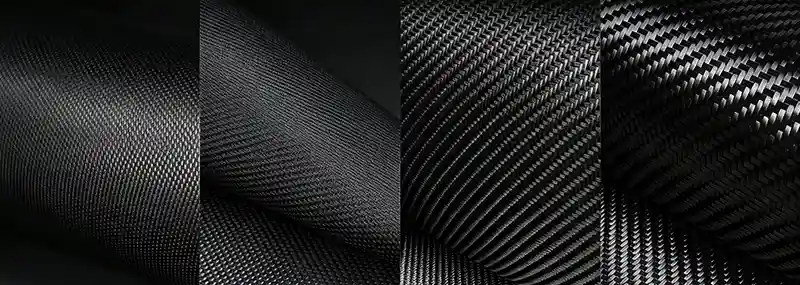
Different carbon fiber grades are engineered for different combinations of stiffness and strength. Common fiber families include T300, T700, T800, and M40J, although exact mechanical properties depend on the manufacturer and product specification.
T300 Carbon Fiber
T300 is widely recognized as a standard-modulus carbon fiber used in general structural composite applications.
Its combination of mechanical performance, processability, and commercial availability makes it suitable for a broad range of composite components.
Typical applications include:
- Automotive components
- Industrial structures
- Sporting goods
- Marine products
- General-purpose carbon fiber parts
T700 Carbon Fiber
T700 is commonly associated with high-strength carbon fiber applications. It is frequently selected where tensile strength and structural efficiency are important.
Potential applications include:
- Automotive structures
- Sporting goods
- Pressure vessels
- Industrial components
- Lightweight structural parts
The exact modulus and tensile properties should always be confirmed using the manufacturer’s technical data sheet.
T800 Carbon Fiber
T800 is a high-performance carbon fiber family used in applications requiring a combination of high strength and structural efficiency.
Depending on the specific grade, T800-series fibers can provide performance advantages for demanding aerospace, automotive, and advanced composite applications.
As with other fiber families, engineers should use the specific manufacturer’s datasheet rather than assuming that every T800 product has identical mechanical properties.
M40J Carbon Fiber
M40J is associated with intermediate-modulus carbon fiber applications where higher stiffness is required than conventional standard-modulus materials can provide.
It can be considered for weight-sensitive structures where stiffness is a major design requirement.
The actual tensile modulus, tensile strength, and strain-to-failure should be evaluated according to the specific M40J specification and supplier documentation.
Carbon Fiber Modulus Specifications
The following table provides a general engineering reference rather than universal specifications.
| Carbon Fiber Grade | Typical Tensile Modulus | Typical Tensile Strength | General Characteristics |
|---|---|---|---|
| Standard Modulus | ~220–240 GPa | ~3.5–5.5 GPa | Balanced stiffness, strength, and cost |
| Intermediate Modulus | ~270–350 GPa | ~3.0–4.5 GPa | Higher stiffness with useful strain capability |
| High Modulus | ~350–500+ GPa | ~2.0–3.5 GPa | Very high stiffness and dimensional stability |
| Ultra-High Modulus | 500+ GPa | Varies by grade | Specialized stiffness-critical applications |
Note: These values are representative ranges, not universal specifications. Actual mechanical properties vary by carbon fiber grade, manufacturer, production process, test method, and material batch. Engineers should always refer to the relevant technical data sheet and test standard when selecting a material.
How to Choose the Right Carbon Fiber Modulus
Choosing the correct carbon fiber modulus starts with understanding what limits the component’s performance.
The following questions can help guide material selection:
- Is the component primarily stiffness-limited or strength-limited?
- What are the expected static and dynamic loads?
- Will the component experience impact or crash loading?
- Is weight reduction a major design objective?
- How important is dimensional stability?
- What operating temperatures will the part experience?
- What fiber orientation and laminate architecture will be used?
- What manufacturing process will be used?
- What is the required production volume and material budget?
When to Use Standard Modulus Carbon Fiber
Standard modulus carbon fiber is often the most practical choice when:
- General structural performance is sufficient
- Cost efficiency is important
- Tensile strength is a major consideration
- The component does not require extreme stiffness
- Large production volumes are expected
For many automotive, marine, sporting goods, and industrial composite parts, standard modulus materials can provide an effective balance between performance and cost.
When to Use Intermediate Modulus Carbon Fiber
Intermediate modulus carbon fiber may be appropriate when:
- Greater stiffness is required than standard modulus can provide
- Weight reduction is important
- Dimensional stability matters
- The application requires a balance between stiffness and strain capability
- Material cost is still an important consideration
When to Use High Modulus Carbon Fiber
High modulus carbon fiber becomes attractive when:
- Structural deflection must be minimized
- Maximum stiffness-to-weight performance is required
- Dimensional stability is critical
- The application is highly weight-sensitive
- The additional material cost can be justified
Typical applications include aerospace, satellite, precision engineering, and other highly stiffness-sensitive structures.
Carbon Fiber Modulus and Composite Manufacturing
Material selection is only one part of achieving consistent composite performance. The manufacturing process also affects the mechanical properties of the finished component.

For carbon fiber composite parts, important manufacturing factors include:
- Fiber orientation accuracy
- Fiber volume fraction
- Resin distribution
- Cure temperature and pressure
- Void content
- Laminate consolidation
- Dimensional tolerances
- Surface quality
- CNC machining accuracy
For example, two components manufactured from the same high-modulus carbon fiber can exhibit different mechanical performance if their laminate structures or manufacturing quality are significantly different.
This is why professional composite manufacturing requires control over both material selection and process parameters.
For OEM and ODM projects, engineers should evaluate the complete material system, laminate design, manufacturing process, and finished-part requirements together.
Frequently Asked Questions About Carbon Fiber Modulus
What is carbon fiber modulus?
Carbon fiber modulus is a measure of the stiffness of a carbon fiber in the elastic range. It is commonly expressed in GPa and describes the relationship between tensile stress and tensile strain.
What is a good modulus for carbon fiber?
There is no single best carbon fiber modulus. Standard modulus is suitable for many general structural applications, while intermediate and high modulus materials can be selected when greater stiffness or stiffness-to-weight performance is required.
Is higher carbon fiber modulus always better?
No. Higher modulus means greater stiffness, but it does not automatically mean higher strength, impact resistance, or better overall performance. Material selection should consider modulus, tensile strength, strain-to-failure, toughness, laminate design, and application requirements.
What is the difference between carbon fiber modulus and tensile strength?
Modulus measures resistance to elastic deformation, while tensile strength measures the maximum tensile stress a fiber can withstand before failure. A carbon fiber can have high modulus without having the highest tensile strength.
What is the difference between standard, intermediate, and high modulus carbon fiber?
Standard modulus fibers provide a balanced combination of stiffness, strength, and cost. Intermediate modulus fibers provide higher stiffness, while high modulus fibers are optimized for very high stiffness and dimensional stability. Exact modulus ranges vary by manufacturer and fiber grade.
How does carbon fiber modulus affect a composite part?
Higher fiber modulus can increase the stiffness of a composite laminate when other design factors are comparable. However, final part stiffness also depends on fiber orientation, fiber volume fraction, resin properties, laminate thickness, stacking sequence, and manufacturing quality.
Conclusion
Carbon fiber modulus is a key property for evaluating the stiffness of carbon fiber reinforcement, but it should never be considered in isolation.
Standard modulus carbon fiber is often the most practical choice for general structural applications. Intermediate modulus materials can provide increased stiffness for weight-sensitive designs, while high and ultra-high modulus carbon fibers are used when exceptional stiffness and dimensional stability are critical.
The most appropriate carbon fiber modulus depends on the complete engineering requirement. Tensile strength, strain-to-failure, impact resistance, fiber orientation, resin system, fiber volume fraction, laminate architecture, manufacturing process, and cost should all be considered when selecting a material.
For OEM and ODM composite projects, the best approach is to evaluate verified material data together with the requirements of the finished component. The goal is not simply to select the highest modulus carbon fiber, but to select the carbon fiber and laminate system that delivers the required performance, weight, durability, manufacturability, and cost.